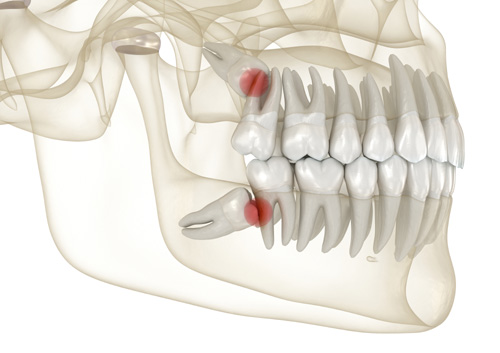
No, you are not too old to have your wisdom teeth removed. There is no upper age limit for wisdom tooth extraction, and adults in their 30s, 40s, 50s, and beyond have them taken out when a tooth becomes impacted, infected, or starts to damage the teeth around it. What changes with age is not whether the surgery is possible but how it is planned: fully formed roots, denser bone, your overall health, and the medications you take all shape the approach and the recovery.
At Legacy Oral Surgery and Implants, our oral and maxillofacial surgeons evaluate and remove wisdom teeth for patients of all ages at our Union City, Elizabeth, and Staten Island offices. This guide is written for adults who did not have their wisdom teeth taken out as teenagers and now want to know what removal looks like later in life, when monitoring makes more sense than surgery, and how to prepare. If you are still deciding whether a tooth needs to come out at all, our guide to the warning signs that your wisdom teeth must go is a good place to start.
Why Most People Have Wisdom Teeth Removed Before 25
Wisdom teeth, or third molars, usually develop in the late teens and early twenties. Many oral surgeons prefer to evaluate them in that window because the roots are often not fully formed yet, the surrounding bone is less dense, and younger patients tend to heal faster. Removal at that stage is often more straightforward, which is why our article on why early removal of impacted wisdom teeth matters encourages an evaluation in young adulthood.
That timing is a preference, not a cutoff. Many adults keep their wisdom teeth for decades without a problem, and others develop symptoms for the first time in their 30s or later.
Can You Be Too Old to Have Your Wisdom Teeth Removed?
Age alone does not rule out extraction, although research shows the risk of complications tends to rise as patients get older. A retrospective study of third molar extractions found that increasing age, a positive medical history, and a wisdom tooth positioned close to the inferior alveolar nerve were each associated with a higher risk of complications. At the same time, an American Association of Oral and Maxillofacial Surgeons study of patients 25 and older found that third molar surgery in this group was associated with minimal morbidity and a low incidence of postoperative complications.
In practical terms, adults can have wisdom teeth removed safely, but the decision deserves careful imaging, a review of your health history, and an honest conversation about the tradeoffs.
Signs an Adult Wisdom Tooth Needs Attention
A wisdom tooth that has been quiet for years can still cause trouble, often because it is impacted, meaning it does not have enough room to come in fully. Food and bacteria can collect under the gum around a partially erupted tooth and lead to infection. Common symptoms include:
- Swelling of the gums or jaw
- Jaw pain or tooth pain at the back of the mouth
- Bleeding or tender gums around the back molars
- Pain when chewing or biting
- A persistent bitter taste or bad breath, even with regular brushing and flossing
Some problems produce no symptoms at all and only show up on an X-ray, such as decay on the back of the neighboring molar, bone loss, or a cyst forming around an impacted tooth. These complications often lead to a recommendation for wisdom tooth extraction, and addressing them sooner helps protect the adjacent teeth, the surrounding bone, and nearby nerves.
How Wisdom Tooth Removal Differs for Adults
No matter your age, wisdom teeth extraction is best handled by an experienced oral surgeon. For adults, a few factors tend to make the procedure more involved than it would be for a teenager.
Fully Formed Roots and Denser Bone
By your late 20s, wisdom tooth roots are usually fully developed and the jawbone around them has become denser. Your surgeon may need to divide the tooth into smaller sections and remove a small amount of bone to take it out gently, which can lengthen both the procedure and the recovery.
Proximity to Nerves
The roots of lower wisdom teeth can sit close to the inferior alveolar nerve, which provides feeling to the lower lip and chin. Detailed imaging technology helps your surgeon see that relationship before surgery. When a root is very close to the nerve, your surgeon may discuss alternatives, such as leaving the tooth in place and monitoring it or, in select cases, a coronectomy, which removes the crown of the tooth and leaves the roots undisturbed.
Health Conditions and Medications
Adults are more likely to take medications that affect surgery and healing, such as blood thinners or bone-strengthening drugs prescribed for osteoporosis, and to manage conditions like diabetes or high blood pressure. Bring a complete medication list to your consultation, and read our overview of medications that can interfere with oral surgery before your visit. Never stop a prescribed medication on your own, since your surgeon will coordinate with your physician if any adjustment is needed.
When Monitoring May Be Better Than Removal
Not every adult wisdom tooth needs to come out. A wisdom tooth that is fully erupted, functional, easy to clean, and free of decay or gum disease can often be monitored with regular exams and X-rays. Removal becomes the stronger recommendation when a tooth is repeatedly infected, is damaging the neighboring molar, shows cyst formation or bone loss, or cannot be kept clean. Your surgeon weighs those findings against your age and health to recommend the path that makes sense for you.
What to Expect From the Procedure and Recovery
Your oral surgeon begins by examining the area and taking imaging to identify which teeth need to be removed and their exact position. You will also review your anesthesia and sedation options, which range from local anesthesia to IV sedation and general anesthesia. If you receive sedation, plan to have someone drive you to and from the appointment and stay with you afterward.
Most adults experience swelling, tenderness, and some minor bleeding for the first few days. Recovery may take a little longer than it would for a teenager, so many adult patients plan for several days of rest and a soft food diet. Following your surgeon’s post-surgical care instructions closely, including avoiding straws and smoking, helps protect the blood clot and lowers the risk of dry socket.
Schedule Your Wisdom Teeth Evaluation at Legacy Oral Surgery and Implants
Whether you are 25 or 65, the real question is not whether you are too old but whether your wisdom teeth are causing problems or are likely to. Our oral and maxillofacial surgeons will review your imaging and health history, explain whether removal or monitoring is the better path, and plan your care around the needs of an adult patient.
To schedule a consultation at our Union City, Elizabeth, or Staten Island wisdom teeth office, use our online contact form, and our team will guide you through the next steps.
Frequently Asked Questions About Wisdom Teeth Removal for Adults
Is there a maximum age for wisdom tooth removal?
There is no maximum age. Oral surgeons remove wisdom teeth for patients in their 30s, 40s, 50s, and older when a tooth is impacted, infected, or damaging nearby teeth. Your imaging and health history matter far more than your age alone.
Is wisdom tooth recovery harder for adults?
Recovery can take somewhat longer for adults because the roots are fully formed and the bone is denser, which may call for a more involved surgery. Many adults plan for several days of rest, a soft food diet, and pain relief as directed by their surgeon.
Should I remove wisdom teeth that are not causing pain?
Not always. A wisdom tooth that is fully erupted, healthy, and easy to clean can often be monitored with regular exams and X-rays. Removal may be recommended if imaging shows decay, gum disease, bone loss, or a cyst, even when there is no pain.
Can I have wisdom teeth removed if I take blood thinners?
Often, yes. Your surgeon will review your medications and may coordinate with the physician who prescribes them. Do not stop or change a prescribed medication without guidance from your doctor.
What type of anesthesia is used for adult wisdom tooth removal?
Options typically include local anesthesia, IV sedation, or general anesthesia, depending on how complex the extraction is and your comfort level. Your surgeon will recommend an approach during your consultation based on your health and the position of the teeth.