Losing a tooth, whether from decay, gum disease, or injury, does more than change the appearance of your smile. The neighboring teeth begin to drift into the gap, bite alignment shifts, and the jawbone in the area starts to break down from lack of stimulation. Dental implants are the only tooth replacement option that addresses all of these consequences at once: the titanium post replaces the root, the bone stays stimulated, and the restoration looks and functions like a natural tooth.
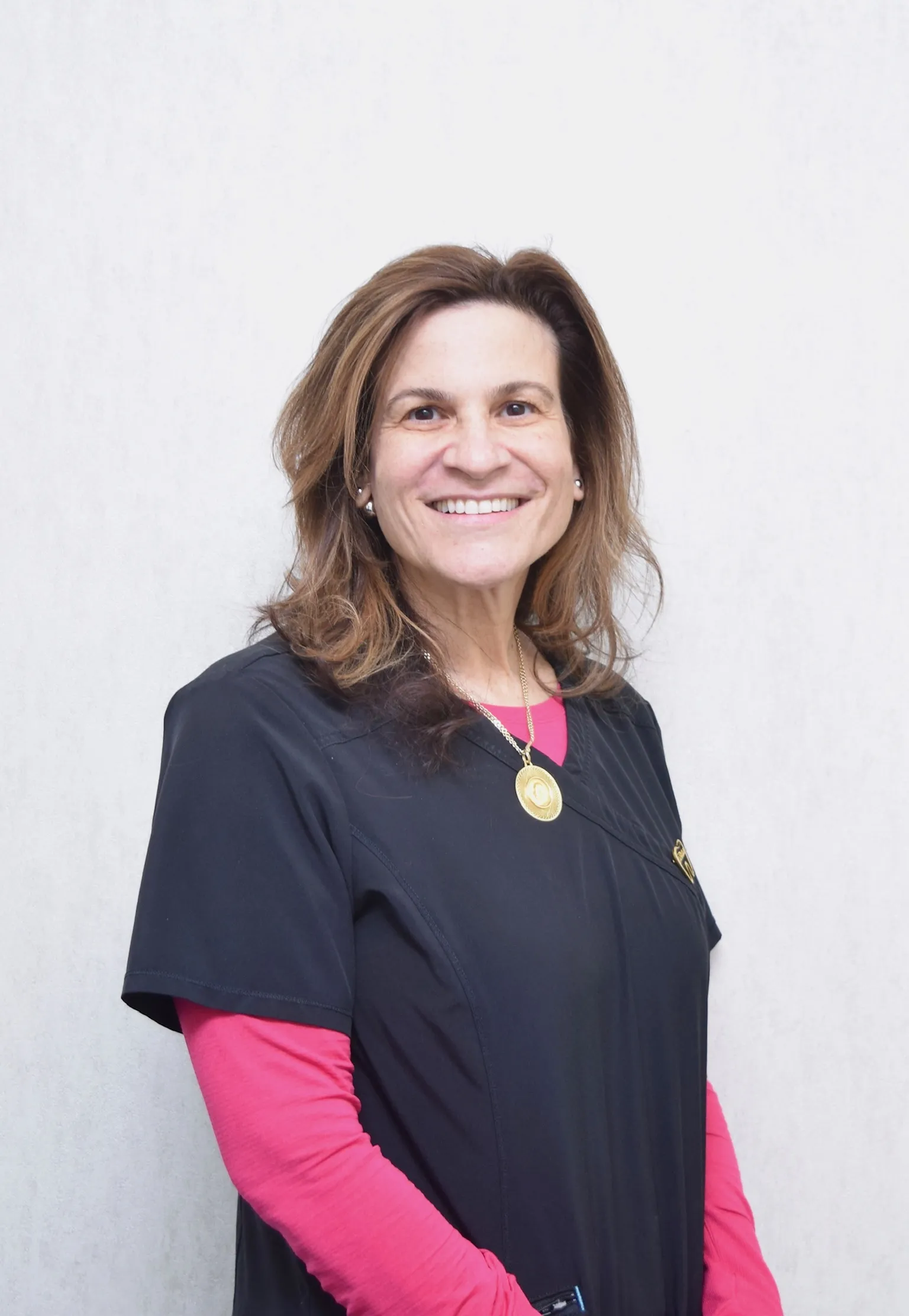
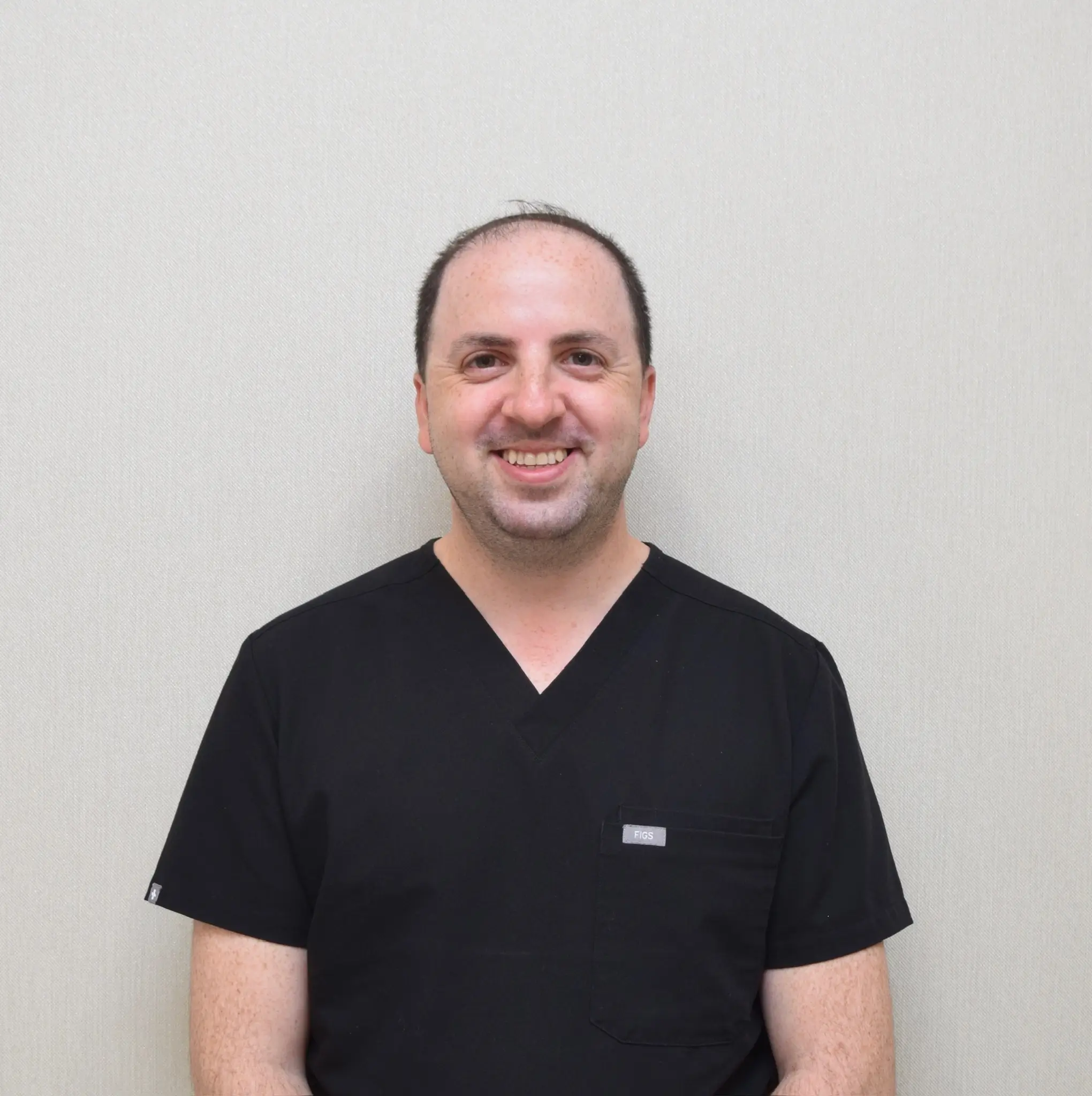
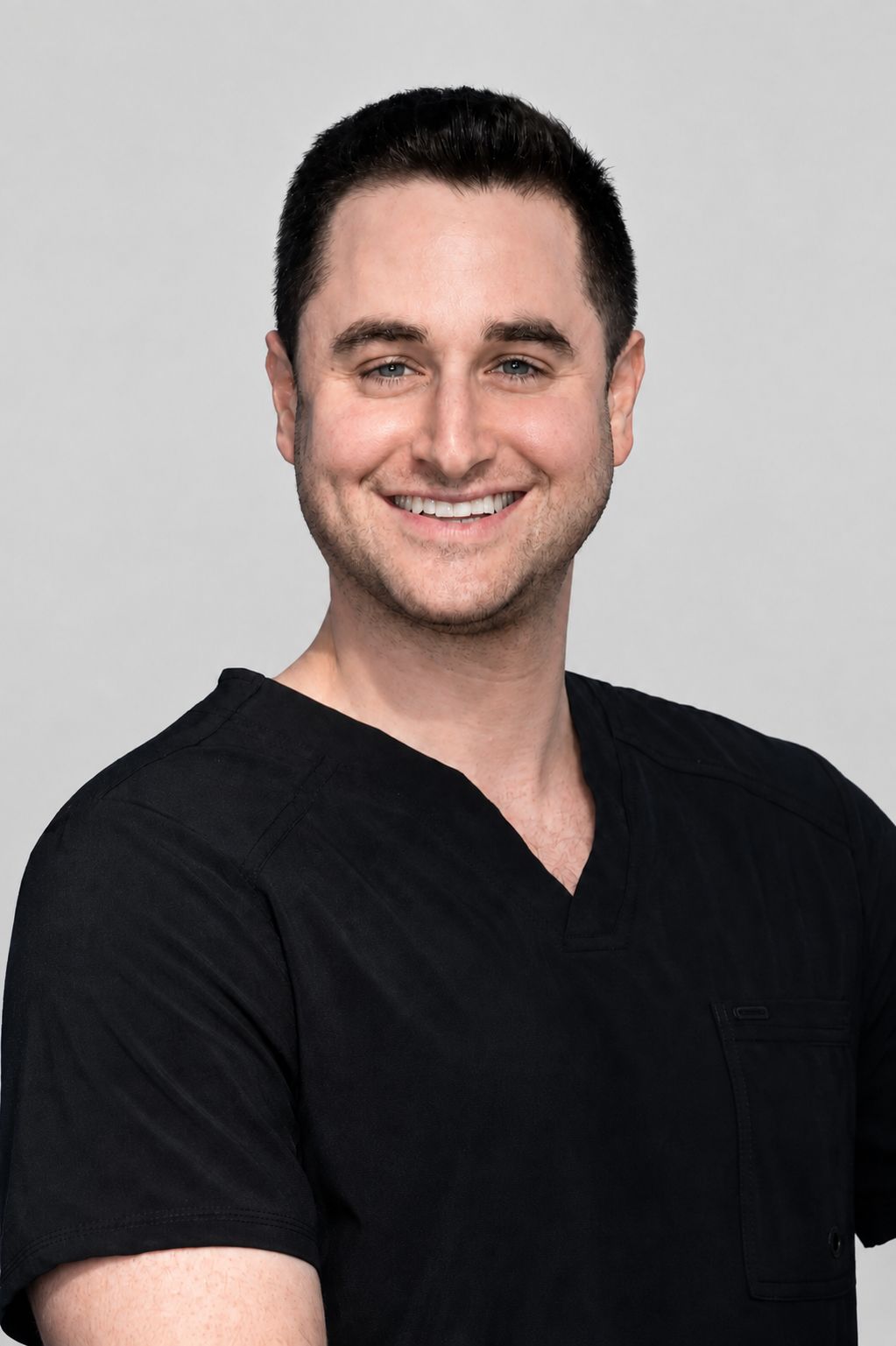
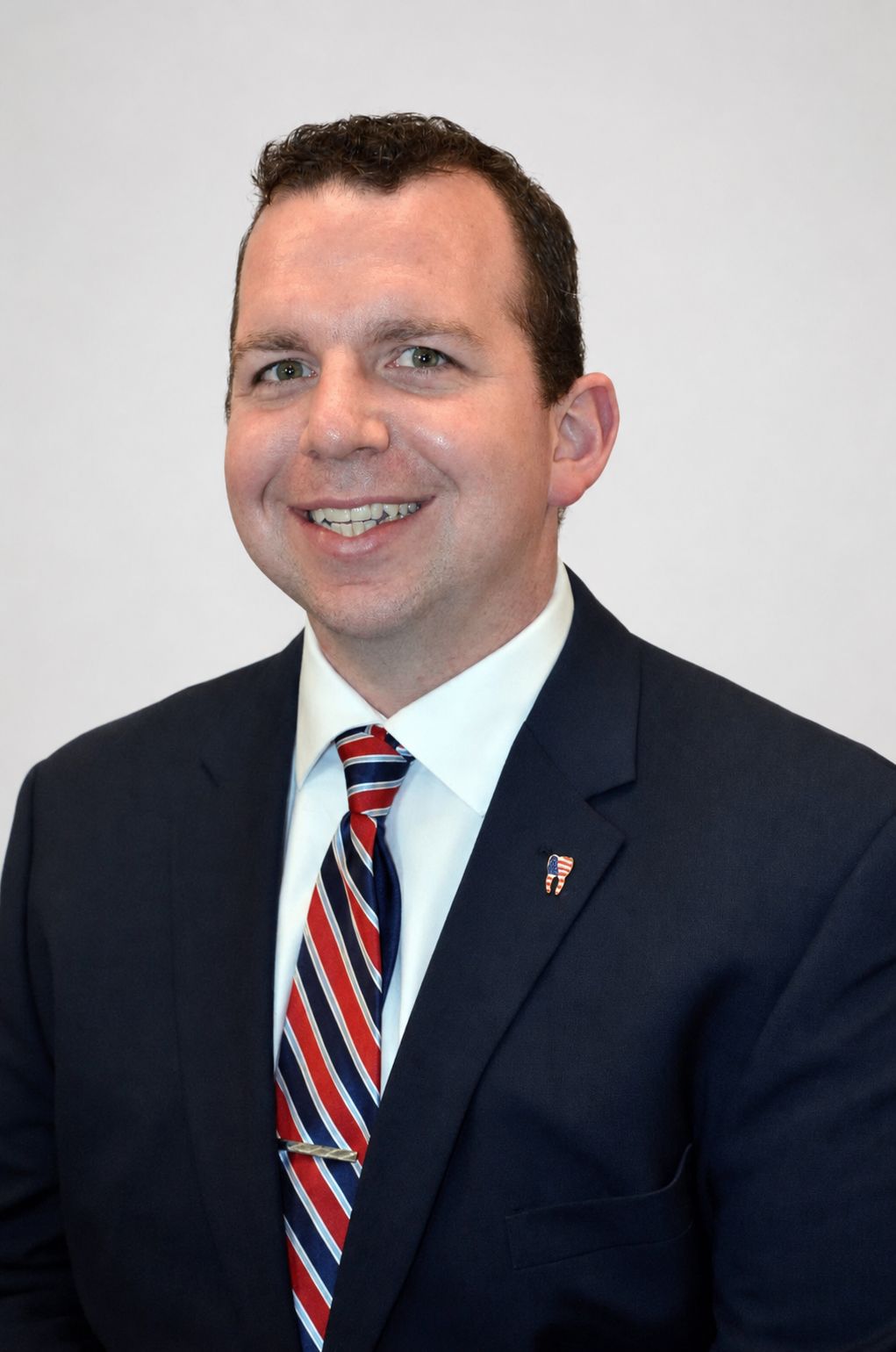
At Legacy Oral Surgery in Union City, NJ, Dr. Nancy Herbst, Dr. David Farkas, and Dr. Hillel Kaye place dental implants as oral and maxillofacial surgeons in Union City, the specialty with the deepest surgical and medical training in the field. From single-tooth replacement to full-arch restoration with All-on-4, our team handles every phase of implant treatment at our 312 44th Street office.
What Are Dental Implants?
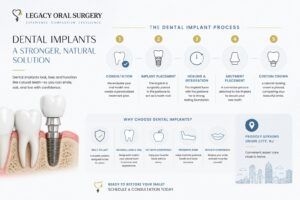
A dental implant is a small titanium post that is surgically placed into the jawbone to serve as an artificial tooth root. Over the course of several months, the post fuses with the surrounding bone through a process called osseointegration, forming a permanent, stable anchor. A custom crown, bridge, or denture is then attached on top to complete the restoration.
Unlike dentures or bridges that sit on top of the gum or rely on neighboring teeth for support, a dental implant is the only tooth replacement that replaces the root itself. This is what makes implants the closest analog to a natural tooth: they restore function from the foundation up, stimulate the jawbone to prevent bone loss, and do not require any modification of the surrounding teeth.
Dental Implants vs. Other Tooth Replacement Options
Patients missing one or more teeth typically have three replacement options: dental implants, a fixed bridge, or a removable denture or partial. Each has a different impact on your oral health, your daily experience, and your long-term bone structure.
| Dental Implant | Fixed Bridge | Removable Denture | |
|---|---|---|---|
| Replaces the root | Yes | No | No |
| Prevents bone loss | Yes | No | No |
| Adjacent teeth affected | No | Yes, filed down | No |
| Removable | No | No | Yes |
| Longevity (post) | Lifetime with care | 10–15 years | 5–10 years |
| Feels like natural tooth | Yes | Mostly | No |
For most patients who are healthy enough to undergo the procedure, dental implants are the superior long-term investment, both clinically and financially, since the costs of replacing failed bridges and ill-fitting dentures over the years often exceed the upfront cost of an implant.
Why Choose an Oral Surgeon for Dental Implants in Union City
Dental implants are a surgical procedure, and the training behind the surgeon matters. Oral and maxillofacial surgeons complete four to six years of hospital-based surgical residency after dental school, with training in anesthesiology, medicine, and complex surgical cases that general dentists do not receive. At Legacy Oral Surgery, Dr. Farkas holds board certification from the American Board of Oral and Maxillofacial Surgery, the highest credential in the specialty, and our entire team brings decades of combined implant experience to every case.
For patients with complicating factors like bone loss, systemic health conditions, or prior implant failures, the surgical depth of our team makes a meaningful difference in outcomes.
Dental Implant Options at Our Union City Office
Legacy Oral Surgery offers the full range of implant-based tooth replacement. The right option depends on how many teeth are missing, the condition of the supporting bone, and your overall treatment goals.
Single-Tooth Implant
A titanium post placed into the jawbone with a custom crown on top. No alteration of adjacent teeth. Functions and feels like a natural tooth and prevents the bone loss that follows an extraction.
Implant-Supported Bridge
Two or more implants support a fixed bridge that replaces several consecutive missing teeth, no need for an individual implant per tooth. A stable, permanent option that does not require grinding down healthy neighboring teeth.
All-on-4 and Full-Arch Restoration
Four strategically angled implants support a full arch of fixed, non-removable teeth. Our Union City team offers All-on-4 and All-on-X procedures for patients who have lost most or all of their teeth and want a complete, permanent solution.
Implant-Supported Dentures
Implants anchor an overdenture, eliminating the slipping and discomfort associated with traditional removable dentures while preserving jawbone density. An excellent option for patients who currently wear dentures and want improved stability.
Candidacy and Preparatory Procedures
Most adults in good general health are candidates for dental implants. The key variables our team evaluates are the amount of available bone at the intended implant site, the condition of the surrounding gum tissue, any systemic health factors that could affect healing, and habits such as tobacco use. Patients who have experienced significant bone loss may still qualify after a preparatory procedure.
Legacy Oral Surgery offers the full range of preparatory treatments in-house:
Bone Grafting
When the jawbone has deteriorated after tooth loss, a bone grafting in Union City rebuilds the necessary volume for implant placement. We perform autogenous bone grafts using your own tissue as well as grafts using processed bone material, depending on the extent of the deficiency.
Sinus Lift Augmentation
When the upper jaw lacks sufficient bone height beneath the sinus cavity, a sinus lift in Union City elevates the sinus floor and adds bone material to create a stable foundation for implants in the posterior upper jaw.
Implant Site Development and Computer-Enhanced Planning
We prepare the implant site to ensure optimal bone support and soft tissue architecture, and use advanced 3D cone beam CT imaging and computer-guided surgical planning to map precise placement before the procedure begins.
The Dental Implant Process: What to Expect
The overall timeline depends on whether preparatory work is needed before placement. For patients with adequate bone who do not need grafting, the process from first appointment to final restoration typically runs three to six months, most of that time is the healing period after implant placement while the post fuses with the jawbone. If bone grafting is needed first, that adds another three to six months to the front end. Our team gives patients a realistic timeline during the consultation so there are no surprises.
Placement surgery itself is performed under local anesthesia. Sedation options including IV sedation and in-office general anesthesia are available for patients who prefer a more comfortable experience or who are having more extensive work done at the same visit.
Cost of Dental Implants in Union City, NJ
The cost of dental implants varies depending on the number of teeth being replaced, whether preparatory bone work is needed, the type of sedation used, and which restoration is placed. Cost varies by case, and we determine your actual cost only after a consultation, once we have reviewed your imaging and developed a specific treatment plan. We accept most major dental insurance plans and offer flexible financing options to help make treatment more affordable.
We accept most major dental and medical insurance plans and will verify your benefits before your appointment. For out-of-pocket balances, we accept CareCredit and Cherry financing. Visit our insurance and financing options for more details.
Long-Term Care After Implant Placement
Once your implants are placed and the restorations are in position, long-term success depends on consistent oral hygiene. The titanium post itself cannot develop a cavity, but the gum tissue around it can become inflamed if hygiene slips, a condition called peri-implantitis that can lead to bone loss around the implant. Staying current with brushing, flossing, and professional cleanings is the single most important factor in how long the restoration holds up. With proper care, the implant post can last a lifetime; the crown typically lasts 15 to 25 years depending on where it sits in the mouth and how much bite force it absorbs.
Schedule Your Dental Implant Consultation in Union City
Dr. Herbst, Dr. Farkas, and Dr. Kaye are available to evaluate your case, review your imaging, and develop a treatment plan specific to your situation. Whether you need a single implant or a full-arch restoration, our Union City team handles every phase of care in-house, from preparatory bone work through final placement. No referral is required. Contact Legacy Oral Surgery to schedule your consultation today.