You made it through your dental procedure, and now your jaw aches, feels stiff, or is sore, and you are wondering if that is supposed to happen. It is a surprisingly common experience, and the good news is that in most cases, jaw soreness after a dental visit is a normal part of the healing process. Wisdom tooth extractions, implant placements, and even lengthy routine appointments can all leave the muscles and joints around your jaw reacting to the stress of staying open for an extended period.
At Legacy Oral Surgery Group, we treat patients ranging in age from newborns to 103 and perform over 7,000 procedures each year across our Union City, Elizabeth, and Staten Island locations. With more than 35 years of combined experience, our team, led by Dr. Nancy Herbst, knows how important it is for patients to feel informed and confident during recovery. If you are experiencing jaw pain after a recent dental or oral surgery procedure, here is what may be causing it and what you can do about it.
What Causes Jaw Soreness After a Dental Procedure?
Jaw soreness after a dental visit is usually due to your jaw being held open longer than it is used to. The muscles and ligaments surrounding the temporomandibular joint (TMJ) can become fatigued and inflamed when stretched or strained during a procedure. This is especially true for longer appointments such as extractions, implant placements, or multi-step surgeries.
Muscle Fatigue and Inflammation
When your mouth is held open for an extended time, the muscles responsible for jaw movement, particularly the masseter and pterygoid muscles, can become strained. This results in soreness, stiffness, and sometimes a limited range of motion in the hours and days that follow. Research published in PubMed Central notes that postoperative pain after oral surgical procedures typically peaks within the first 12 to 24 hours and begins to resolve within a week as tissue heals and inflammation decreases.
Trismus (Difficulty Opening Your Mouth)
A specific type of jaw stiffness known as trismus, which refers to a reduced ability to open the mouth fully, can also occur after oral surgery. It is most common after wisdom tooth extractions or procedures involving the lower jaw. Trismus typically peaks around day two after surgery and gradually improves within the first week. It is caused by muscle spasm and swelling in the surrounding tissue, and it is not a reason for alarm unless it is severe or persists well beyond the initial recovery window.
Is Jaw Soreness After Every Procedure Normal?
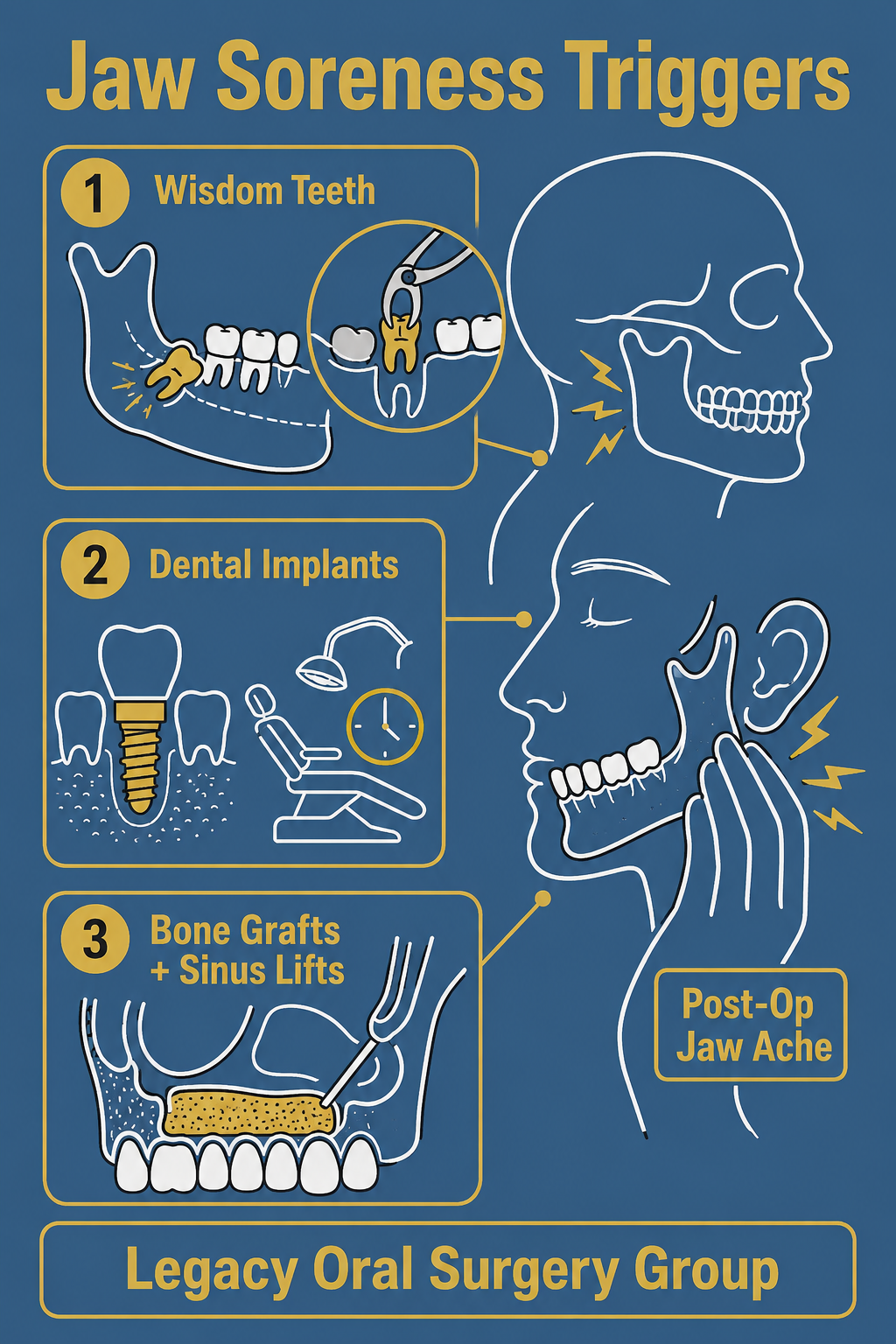
Not every dental procedure will leave you with jaw soreness, but certain ones are more likely to cause it than others. Simple cleanings or short appointments rarely produce this effect. However, more involved procedures with longer chair time are associated with a higher likelihood of post-procedure jaw discomfort. Procedures that more commonly result in jaw soreness include:
- Wisdom tooth extractions: Removing impacted wisdom teeth often requires significant manipulation of the jaw and surrounding tissue, making post-procedure soreness one of the more predictable outcomes.
- Dental implant placement: Implant procedures may require an extended appointment, placing the jaw muscles under sustained stress throughout the process.
- Bone grafts and sinus lifts: These procedures involve working near or within the jawbone, which can lead to greater soreness and stiffness in the days following surgery.
Most cases of jaw soreness tied to these procedures are temporary and respond well to rest, soft foods, and over-the-counter pain management as directed by your surgeon. You can also review our post-surgical care guidelines for specific recovery instructions.
How Long Should Jaw Soreness Last?
For most patients, jaw soreness begins to improve noticeably within three to five days following a procedure. Mild stiffness or achiness that lingers for up to two weeks is still considered within normal range for more involved surgeries. The discomfort should follow a clear downward trend, becoming less intense with each passing day. If your pain is worsening rather than improving after the first 48 to 72 hours, or if you are experiencing difficulty swallowing, fever, or visible swelling that is growing, those are signs to contact your oral surgery team promptly. Our blog on managing pain after oral surgery offers additional guidance on what to expect during recovery.
When Should You Be Concerned About Jaw Pain?
While most jaw soreness is a routine part of healing, there are situations where it can signal something that warrants a closer look. A pre-existing condition involving the TMJ, known as temporomandibular disorder (TMD), can be aggravated by a dental procedure, causing pain that extends beyond the typical healing period. Similarly, if your jaw locked up or a popping or clicking sensation developed that was not present before your procedure, it is worth mentioning to your surgeon. Pain that feels sharp, is localized near the ear, or does not respond to standard pain management may also need further evaluation. You can learn more about these concerns in our blog post on jaw surgery for chronic headaches and jaw popping.
Contact Legacy Oral Surgery Group for Post-Procedure Support
At Legacy Oral Surgery Group, we do not consider our work done when a procedure ends. Dr. Herbst and our team are committed to being present for patients before, during, and after surgery, including addressing any pain or concerns that arise during recovery. With over 25 years of oral and maxillofacial experience and state-of-the-art facilities serving Union City, Elizabeth, and Staten Island, we provide personalized care to make recovery as smooth as possible. For a straightforward dental implant or something more involved, we are here to guide you through every step.
If you are recovering from a recent procedure and have questions about jaw soreness or any other symptoms, do not wait to reach out. Contact our team through our contact page, and we will be happy to help.