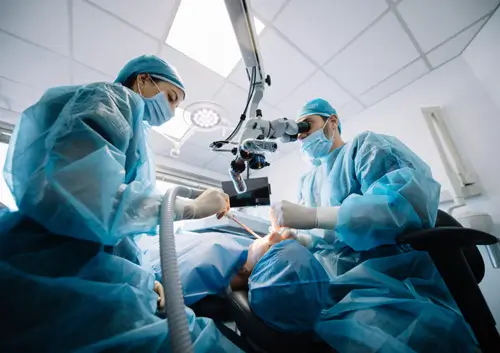
When tooth decay or infection reaches the inner pulp of a tooth, extraction is not always the only path forward. Endodontic surgery offers a range of procedures that can preserve a natural tooth by treating the infection or damage from within, removing the need for extraction in many cases where the damage appears severe. The goal of these procedures is to save the tooth’s structure while eliminating the source of pain or infection.
Our team at Legacy Oral Surgery Group provides endodontic care alongside the full spectrum of oral surgery at our Union City, Elizabeth, and Staten Island offices. Dr. Nancy Herbst, Dr. David Farkas, and Dr. Hillel Kaye bring more than 35 years of combined experience to tooth preservation procedures, guiding patients through each stage with clear expectations and thorough aftercare.
What Is Endodontic Surgery?
Endodontic surgery encompasses procedures that focus on saving a tooth by treating the tissue inside it, specifically the dental pulp and root canal system. The pulp is the soft tissue at the center of each tooth containing nerves, blood vessels, and connective tissue. When this tissue becomes infected or inflamed due to deep decay, repeated dental procedures, or trauma, it can cause significant pain and put the tooth’s survival at risk.
The most familiar endodontic procedure is the root canal, which removes infected or damaged pulp through the crown of the tooth. But there are additional surgical options available when a standard root canal cannot fully resolve the problem, including apicoectomy and endodontic retreatment. Each procedure addresses a different stage or type of endodontic problem, and the right choice depends on the specific anatomy and condition of the tooth.
Signs You May Need Endodontic Surgery
Symptoms of pulp infection or damage develop gradually in some patients and suddenly in others. A deep cavity that allows bacteria to reach the pulp is a common pathway, as is a tooth that has sustained significant trauma. Knowing the warning signs helps you seek care before the infection spreads to surrounding bone or tissue.
Common indicators that endodontic treatment may be necessary include:
- Severe or persistent tooth pain: Pain that lingers after removing the source, such as a bite or temperature change, suggests pulp involvement
- Prolonged sensitivity to heat or cold: Discomfort that does not resolve within a few seconds of removing the stimulus
- Visible gum bumps: A pimple-like bump on the gum near a tooth that does not go away may indicate an abscess draining from the root
- Tooth darkening: A tooth that appears darker than its neighbors may have a compromised blood supply
- Swollen or tender gums: Localized swelling around a specific tooth, particularly when paired with tooth pain
Some patients have no symptoms at all and discover the problem during a routine dental X-ray. Whether symptoms are present or not, early evaluation and treatment produce better outcomes and simpler procedures.
Root Canal Procedure: What to Expect
A root canal is the most common form of endodontic surgery. The procedure begins with local anesthesia to ensure complete comfort throughout. After numbing the area, the surgeon places a rubber dam around the tooth to isolate it from saliva and keep the field clean. An opening is made through the crown of the tooth to access the pulp chamber.
Specialized instruments are used to remove the infected or damaged pulp tissue and shape the canal walls. The canals are then flushed with an antimicrobial solution to eliminate remaining bacteria. Once the canals are clean and shaped, a biocompatible material is used to fill and seal them, preventing reinfection. A temporary or permanent crown typically follows to restore the tooth’s strength and function.
Most patients experience mild soreness and sensitivity for a few days after the procedure, which over-the-counter anti-inflammatory medications can manage effectively. The tooth itself is no longer vital after pulp removal, meaning it will not feel temperature or pressure the same way, but it can continue functioning normally for many years with proper care.
Ready to Schedule Your Consultation?
Our board-certified oral surgeons are here to help you find the right treatment. Schedule your appointment today.
When a Root Canal Is Not Enough: Apicoectomy
Some teeth do not fully heal after a root canal, or new problems develop over time at the root tip. An apicoectomy, also called root-end surgery or endodontic microsurgery, addresses infections or abnormalities at the very tip of the tooth’s root that cannot be reached from above through the crown.
During an apicoectomy, the oral surgeon makes a small incision in the gum tissue to access the root tip directly. The tip of the root and any infected tissue surrounding it are removed. The area is then cleaned and a small filling is placed to seal the root end and prevent future bacterial entry. The incision is closed with sutures, and the surrounding bone heals over the filling material in the weeks following the procedure.
This procedure is particularly effective for teeth with persistent infection despite prior root canal treatment, cysts that have formed at the root tip, anatomical features such as curved or calcified canals that prevent thorough cleaning from above, and cases where a broken instrument is lodged near the root tip. Recovery typically involves a few days of mild soreness and swelling, with most patients returning to regular activities within 24 to 48 hours.
Endodontic Retreatment
When a tooth that previously received root canal treatment develops new symptoms or shows signs of reinfection on an X-ray, endodontic retreatment may be recommended. This non-surgical procedure involves reopening the tooth, removing the existing filling material, and thoroughly re-cleaning and re-sealing the canal system.
Retreatment addresses cases where the initial procedure did not fully clear the infection, where new decay has created a pathway for bacteria to re-enter, or where previously undetected canals were not treated the first time. Success rates for both retreatment and apicoectomy are high, often exceeding 90%, making these procedures worthwhile alternatives to extraction in many situations.
Protecting Your Natural Teeth
Nothing functions as effectively as a natural tooth, and preserving your original dentition whenever possible supports long-term oral health in ways that replacement options cannot fully replicate. Natural teeth maintain the jawbone, preserve the alignment of surrounding teeth, and transmit bite forces in a way that promotes bone density. When extraction becomes necessary, our team can discuss dental implant options that closely replicate the function and appearance of a natural tooth, but saving the original tooth is always the first consideration.
Preventing the need for endodontic surgery starts with addressing dental issues before they progress. Regular check-ups catch deep cavities before they reach the pulp, and addressing tooth sensitivity early gives you more straightforward treatment options than waiting until pain becomes severe.
Recovery and Aftercare
Recovery from endodontic procedures varies depending on the type of surgery performed. Following a root canal, mild soreness lasting two to four days is normal and responds well to over-the-counter anti-inflammatory medications. The treated tooth may feel slightly different from surrounding teeth for a few weeks as the surrounding tissue heals.
After an apicoectomy, some swelling and bruising around the surgical site is expected and typically peaks within the first 24 to 48 hours before improving. Applying a cold compress in intervals during the first day helps minimize swelling. Patients are advised to eat soft foods and avoid chewing on the treated side until the sutures are removed or dissolve, usually within one to two weeks. The bone heals over the following months, and follow-up imaging confirms that healing is progressing appropriately.
Endodontic Care at Legacy Oral Surgery Group
Dr. Herbst, Dr. Farkas, and Dr. Kaye bring advanced surgical training to tooth preservation procedures across all three Legacy Oral Surgery Group locations. Our team combines thorough diagnostic imaging with precise surgical technique to give each tooth the best possible chance of a successful outcome. We serve patients in Union City, Elizabeth, and Staten Island who need endodontic evaluation and care.
If you are experiencing tooth pain, sensitivity, or swelling, schedule an evaluation before the condition progresses. You can reach us by contacting us online to arrange a consultation.
Frequently Asked Questions About Endodontic Surgery
Is a root canal painful?
Root canals are performed under local anesthesia, so you should not feel pain during the procedure itself. Some patients experience mild soreness and sensitivity in the days following the procedure, which typically resolves on its own or with over-the-counter anti-inflammatory medication. Modern techniques and anesthetics make root canals far more comfortable than their reputation suggests.
What is an apicoectomy, and how is it different from a root canal?
A root canal treats the inside of a tooth through an opening in the crown, removing infected pulp and sealing the canals. An apicoectomy is a surgical procedure that accesses the root tip from the outside by making a small incision in the gum. It is used when a root canal alone cannot fully resolve a persistent infection, often because of anatomical factors or a problem at the very tip of the root. The two procedures can be used independently or together.
What are the success rates for endodontic surgery?
Root canals, endodontic retreatment, and apicoectomies all have high success rates when performed on appropriate candidates, often exceeding 90%. Success depends on factors including the extent of infection, the anatomy of the tooth’s root system, and adherence to aftercare recommendations. Your oral surgeon can give you a more specific outlook based on your individual case during consultation.
How do I know if I need endodontic retreatment after a prior root canal?
Signs that a previously treated tooth may need retreatment include returning pain or sensitivity, swelling near the treated tooth, a gum bump near the root, or evidence of new infection on an X-ray. Some cases are detected on routine X-rays with no symptoms at all. If your dentist or oral surgeon identifies a problem with a previously treated tooth, retreatment is often a viable option before extraction is considered.
Is it better to save a tooth with endodontic surgery or replace it with an implant?
Preserving a natural tooth is almost always the preferred first option. Natural teeth maintain the jawbone, support surrounding teeth, and transmit bite forces more naturally than any replacement. When a tooth can be saved with endodontic surgery, that is typically the better long-term choice. If a tooth is too damaged to save, a dental implant is the closest replacement option in terms of function and bone preservation. Your oral surgeon can evaluate the specific condition of the tooth and give you a clear recommendation.