Medically Reviewed by Dr. Nancy Herbst on September 24, 2026
Bruxism is the medical term for grinding or clenching your teeth, a habit that often happens without you realizing it, especially during sleep. It is far more than an occasional annoyance: repeated grinding wears down enamel, strains the jaw joint, and can lead to chronic headaches, tooth fractures, and costly restorative work if it goes unmanaged. The earlier bruxism is identified and treated, the easier it is to prevent lasting damage to your teeth and jaw.
At Legacy Oral Surgery, Dr. Nancy Herbst and our team evaluate patients for bruxism as part of our broader oral and maxillofacial surgery services, and we work with you to find the combination of treatments, from night guards to Botox, that fits your symptoms and lifestyle. Below, we break down the most effective approaches available today and how to know which one may be right for you.
What Causes Bruxism?
Bruxism does not have a single cause. For many patients, it is closely tied to stress and anxiety, which can trigger clenching during the day or grinding during sleep. Sleep bruxism is also associated with other sleep disorders, including obstructive sleep apnea, so patients who snore heavily or wake up feeling unrested should mention this to their provider.
Other contributing factors include a misaligned bite, missing or crooked teeth, and certain medications or stimulants, such as caffeine, alcohol, and some antidepressants. Because the causes vary so widely from person to person, an accurate diagnosis is the first step toward choosing an effective treatment.
Signs You Might Have Bruxism
Bruxism often develops gradually, and many people do not realize they grind their teeth until a partner mentions the sound or a dentist notices the wear. Common warning signs include the following.
- Morning jaw soreness or tightness that improves as the day goes on
- Dull, recurring headaches centered near the temples
- Flattened, chipped, or loosened teeth that were not previously damaged
- Increased tooth sensitivity to hot or cold
- Clicking or popping in the jaw joint when chewing or speaking
If any of these signs sound familiar, it is worth having your bite and jaw evaluated before the damage progresses further.
Night Guards and Bruxism
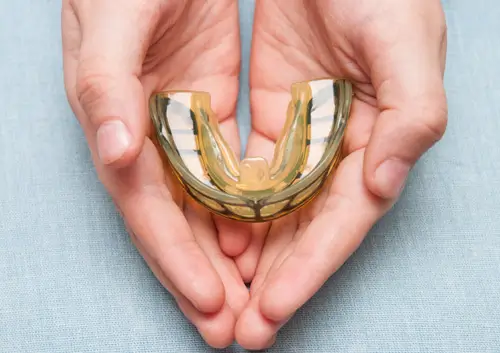
Night guards and splints work like retainers. They are custom-designed to fit into your mouth and prevent you from grinding your teeth throughout the night. The barrier between your upper and lower jaw limits the damage done to your teeth, though because the guard does not stop the actual motion of your jaw, you may still wake up with some soreness.
Night guards do come with a short adjustment period. If you are not used to wearing one, you may find yourself drooling more than usual during your first few nights, and you will need to clean and store your guard properly to avoid exposing yourself to bacteria. Most patients adjust within a week or two and find that a well-fitted guard is far more comfortable than an over-the-counter version.
Dental Correction and Bruxism
If you have an uneven bite or misaligned jawbones, you may benefit from a dental corrective approach rather than, or alongside, a night guard. An occlusal adjustment reshapes the biting surfaces of your teeth so your upper and lower jaw meet more evenly, which can reduce the muscle strain that drives grinding. In more significant cases, oral surgeons can also reposition the jaw itself, moving it forward or backward so the mandibles align properly.
You do not have to commit to surgery to pursue a dental correction. Braces or clear aligners can resolve mild to moderate misalignment over time, and for many patients this alone reduces the frequency and intensity of grinding episodes.
Botox and Bruxism
While Botox made its name as a cosmetic treatment, it can also temporarily reduce jaw clenching and teeth grinding. Botox injections relax the muscles responsible for chewing, most often the masseter muscles, so they contract with less force during sleep or periods of stress.
Most patients notice a difference within one to three days of treatment, and the effects typically last three to six months before a follow-up injection is needed. A peer-reviewed overview of the available research on botulinum toxin for bruxism found that most studies reported reductions in jaw pain, grinding frequency, and bite force among treated patients, though researchers note it works best as part of a broader treatment plan rather than a standalone cure.
Psychological Treatments and Bruxism
Some clinicians believe bruxism stems largely from stress and other mental factors, so pairing psychological support with medical treatment can improve results for many patients. Common approaches include the following.
- Stress management, including breathing exercises, yoga, meditation, and other stress-reducing habits
- Cognitive-behavioral therapy, which addresses the thought patterns that contribute to clenching before working to correct them
- Biofeedback, a technique that helps you recognize and consciously release muscle tension
Patients with mild bruxism sometimes stop grinding entirely with these approaches alone. If you are noticing measurable dental damage, though, it is best to pair psychological strategies with medical or surgical care.
Medications and Bruxism
Certain medications can also ease bruxism symptoms or reduce how often episodes occur. The most common categories include the following.
- Muscle relaxants, typically used short term
- Anti-anxiety medications, when stress is a primary driver
- Antidepressants, prescribed carefully since some can also contribute to grinding in certain patients
Your physician or oral surgeon can help determine whether medication may help your specific case. As with psychological treatment, medication does not repair teeth that are already damaged, so ongoing jaw pain or visible tooth wear should still be evaluated in person.
When to See an Oral Surgeon About Bruxism
Left unaddressed, bruxism puts the health of your teeth and jaw at continued risk. If you are struggling to control nightly grinding, or if you notice new chips, cracks, or persistent jaw pain, an oral surgeon at Legacy Oral Surgery can walk you through the options above and recommend the combination that fits your situation. We see patients from our Union City, Elizabeth, and Staten Island offices.
You can learn more about the services we offer for bruxism by visiting our contact page to schedule a consultation.
Frequently Asked Questions About Bruxism Treatment
How do I know if I actually have bruxism?
The most reliable signs are morning jaw soreness, recurring headaches near the temples, and visible wear, chips, or flattening on your teeth that a dentist or oral surgeon can identify during an exam. A partner reporting grinding sounds at night is also a strong indicator worth mentioning at your next appointment.
Is Botox safe for treating bruxism?
Botox has been studied for jaw clenching and grinding and is generally considered safe when administered by a qualified provider. It is typically used alongside other treatments, such as a night guard or stress management, rather than as a stand-alone solution.
How long does a custom night guard last?
A custom-fitted night guard typically lasts several years with proper cleaning and storage, though heavy grinders may notice wear sooner and need a replacement more frequently. Bringing your guard to routine checkups allows your provider to check its fit and condition.
Can bruxism go away on its own?
Mild, stress-related bruxism can ease once the underlying stressor resolves, but many cases persist without some form of treatment. Because grinding can continue to damage teeth even when it feels manageable, an evaluation is the safest way to confirm whether treatment is needed.
Will insurance cover treatment for bruxism?
Coverage varies widely by plan and by treatment type. Night guards and dental correction are sometimes partially covered under dental benefits, while Botox for bruxism is more often billed as a cosmetic or elective service. Our team can help you understand your options during a consultation.
About the Author
Dr. Nancy Herbst
Dr. Nancy Herbst is a board-certified oral and maxillofacial surgeon with more than 25 years of experience. She leads Legacy Oral Surgery and Implants, serving patients across Union City, Elizabeth, and Staten Island with advanced surgical care and personalized treatment planning.