Medically Reviewed by Dr. Nancy Herbst, DDS
A gum graft is usually healing properly when swelling and tenderness ease a little more each day after the first two to three days, the graft stays in place and slowly turns from pale to pink, and the roof of your mouth (if tissue was taken from there) feels less raw week by week. Most of the visible healing happens in the first two to six weeks, while the tissue keeps maturing for a few months after that. Pain that gets worse instead of better, a graft that turns dark or comes loose, bleeding that will not stop with pressure, or pus and fever are signs to call your surgeon.
If you require a gum graft, the oral surgeons at Legacy Oral Surgery and Implants are here to help. Our team performs soft tissue grafting as part of our cosmetic periodontal procedures, and we see patients through every stage of recovery, from the first follow-up visit to the final check that the new tissue has matured. The guide below walks through what normal healing looks like, a typical timeline, and the warning signs worth a phone call.
How Gum Graft Healing Works
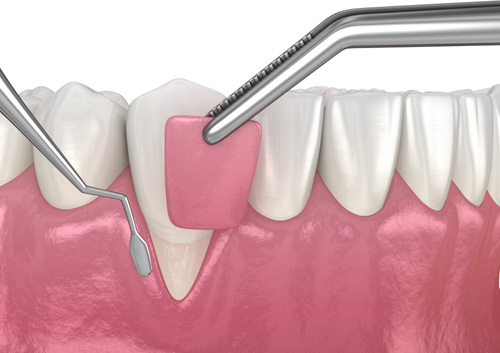
Gum grafting is the process of taking healthy tissue from one area of your mouth, or using donor tissue, and placing it where the gums have receded or become too thin. The goal is to cover exposed roots, thicken the gumline, and protect the tooth from further recession. If you are still deciding whether you need the procedure, our post on common reasons patients need a gum graft covers the most frequent causes.
After surgery, healing happens in two places at once. The recipient site, where the graft was placed, has to attach to the tooth root and surrounding tissue and build a new blood supply. The donor site, often the roof of the mouth, has to close and regrow its surface layer. These two areas heal on different schedules and feel different, so it helps to know what to expect from each.
The Recipient Site
In the first few days, the graft survives on nutrients from the tissue underneath it. Over the following weeks, new blood vessels grow into it, and the graft gradually bonds with the gum tissue and root surface around it. This is why keeping the area still and undisturbed matters so much early on: movement can interrupt that fragile connection while it forms.
The Donor Site
When tissue is taken from the palate, the roof of your mouth is left with a wound that heals on its own, sometimes under a protective dressing or stent. The donor site is often the more uncomfortable of the two. A 2024 systematic review of free gingival graft research found that most complications reported after this type of graft are linked to the donor site rather than the graft itself, with pain and bleeding among the most common (Journal of Functional Biomaterials, 2024). Knowing this ahead of time can make a sore palate feel less alarming.
Gum Graft Healing Timeline
Every patient heals at a different pace, and the size of the graft, the technique used, and your overall health all play a part. The timeline below reflects a typical recovery, and your surgeon may give you a schedule that differs based on your treatment.
Days 1 to 3
Some bleeding and oozing is expected on the first day, especially from the palate. Swelling usually builds over the first 48 to 72 hours and then begins to settle. You may feel a burning or raw sensation at the donor site during these first few days. This is the period when rest, cold compresses, and following your aftercare instructions closely do the most good. For comfort strategies during this stretch, see our guide on how to relieve pain after a gum graft procedure.
Days 4 to 14
Swelling and soreness should be noticeably lower by the end of the first week. The graft may look white, gray, or slightly puffy during this time, which is often a normal part of the surface layer renewing itself rather than a sign of failure. Stitches, if used, are commonly removed or dissolve within one to two weeks. General discomfort at the donor site can last about two weeks, and many patients return to normal daily activities during this window.
Weeks 2 to 6
This is when the graft binds to the root of the tooth and nearby structures, and new blood vessels supply the tissue. You should notice the graft turning pinker and blending more closely with the surrounding gums somewhere between four and six weeks after your procedure. The palate continues to close and toughen, and depending on how much tissue was taken, it may take up to two months to feel fully normal.
Months 2 to 6
The tissue keeps maturing well after it looks healed. Color, texture, and contour often continue to improve over several months as the graft settles. Your surgeon may evaluate the final result at a later follow-up visit once the tissue has stabilized.
Ready to Schedule Your Consultation?
Our oral surgeons are here to help you find the right treatment. Schedule your appointment today.
Signs Your Gum Graft Is Healing Properly
Healing rarely moves in a perfectly straight line, but the overall trend should be steady improvement. These are some of the most reassuring signs that recovery is on track:
- Swelling peaks early, then fades. Puffiness that tops out around day two or three and shrinks afterward is a normal pattern.
- Discomfort decreases over time. Soreness that eases from one day to the next, rather than building, suggests the tissue is settling.
- The graft stays in place. The new tissue remains where your surgeon put it, even if it looks pale or slightly uneven at first.
- Color moves from pale to pink. A white or gray look in the first week or two that gradually gives way to healthy pink tissue is a common sign of a new blood supply.
- The tissue shrinks slightly. Some shrinkage of the soft tissue as swelling resolves is expected and is part of normal healing.
- The palate feels less raw each week. The burning feeling at the donor site should soften into mild tenderness and then fade.
If you are seeing most of these signs, your recovery is likely moving in the right direction. Keep your follow-up appointments so your surgeon can confirm what you are noticing at home.
Warning Signs of a Problem After a Gum Graft
Complications after gum grafting are not common, but knowing what to watch for helps you act quickly if something changes. Contact your oral surgeon promptly if you notice any of the following.
Pain or Swelling That Gets Worse
Discomfort that increases after the third or fourth day, or swelling that returns after it had started to go down, can point to infection or irritation at the surgical site. Pain that does not respond to the medication your surgeon recommended is also worth a call.
Bleeding That Will Not Stop
Light oozing in the first day is normal. Steady bleeding that continues after you apply firm, gentle pressure with gauze for about 30 minutes, or bleeding that starts again days later, should be checked, particularly at the palate.
Changes in the Graft Itself
A graft that turns dark red, purple, or black, pulls away from the tooth, or appears to have shifted or come off entirely may not be getting the blood supply it needs. Early attention gives your surgeon the best chance to address the problem.
Signs of Infection
Pus, a foul taste or odor that does not improve with gentle rinsing, a fever, or swelling that spreads toward the cheek or jaw can be signs of infection. These symptoms call for a prompt visit rather than waiting for your next scheduled appointment.
Factors That Can Affect How Well a Graft Heals
Several things can influence how smoothly your recovery goes. Some are within your control, and others are worth discussing with your surgeon before treatment.
Habits and Aftercare
Smoking and vaping reduce blood flow to the gums, which can slow the formation of new blood vessels the graft depends on. Pulling your lip to look at the graft, poking the area with your tongue or fingers, brushing directly on the site before you are cleared to, and drinking through a straw can all disturb the tissue in the early weeks. Following the cleaning and rinsing instructions you receive, and avoiding strenuous activity for the first few days, gives the graft the calm conditions it needs.
Diet
Soft, cool, non-spicy foods are easier on both the graft and the palate during the first one to two weeks. Hard, crunchy, or very hot foods can irritate or dislodge the tissue. Our separate guide on what to eat after a gum graft offers meal ideas for each stage of recovery.
Overall Health
Conditions that affect circulation or healing, such as poorly controlled diabetes, can make recovery slower. Be sure your surgeon knows about your medical history and any medications you take, since some can affect bleeding or healing.
Why Follow-Up Visits Matter
Your follow-up appointments are the most reliable way to know how your graft is doing. During these visits, your surgeon checks how well the graft has attached, removes stitches if needed, looks at the donor site, and updates your care instructions as you progress. Some changes that worry patients, such as a pale graft in the first week, are normal, while others that seem minor can benefit from early care. A professional exam settles those questions far better than a mirror at home.
Above all else, following your doctor’s postoperative instructions and attending every follow-up appointment gives your graft the best opportunity to heal well. Typically, patients can recover fully in as little as two months, although the tissue may keep maturing for some time after that.
Gum Graft Care at Legacy Oral Surgery and Implants
Because gum grafts offer meaningful health and aesthetic benefits, choosing the right oral surgeon for the procedure matters. At Legacy Oral Surgery and Implants, our surgeons have extensive experience performing gum grafts and helping patients heal as comfortably as possible. We know oral surgery can bring anxiety and questions, so we explain each step of your treatment plan, give you clear aftercare instructions, and make ourselves available if something during recovery does not look or feel right.
We offer modern procedures in a friendly and relaxed environment at our offices in Staten Island, Elizabeth, and Union City. If you are considering a gum graft or have questions about your recovery, please complete our contact form today.
Frequently Asked Questions About Gum Graft Healing
Is it normal for a gum graft to look white?
A white or grayish appearance during the first week or two is common and often reflects the surface layer of the graft renewing itself. As new blood vessels grow into the tissue, it usually turns pinker over the following weeks. If the graft turns dark, black, or appears to be coming loose, contact your surgeon.
How long does it take for a gum graft to heal?
Most initial healing takes place in the first two weeks, and the graft typically bonds with the surrounding tissue between four and six weeks after surgery. The donor site on the palate may take up to two months to feel fully normal, and the graft can continue to mature in color and contour for several months.
How can I tell if my gum graft has failed?
Possible signs include a graft that turns dark or black, pulls away from the tooth, or comes off, along with pain or swelling that keeps getting worse. Only an exam can confirm whether a graft is failing, so call your oral surgeon if you notice any of these changes.
When can I brush near my gum graft?
Most surgeons ask patients to avoid brushing the graft itself for a period after surgery while continuing to clean the rest of the mouth carefully. Your surgeon will tell you when it is safe to brush the area and may recommend a rinse in the meantime. Follow the specific timeline you are given.
Why does the roof of my mouth hurt more than the graft?
When tissue is taken from the palate, it leaves an open area that has to heal on its own, and that wound is often more sensitive than the graft site. Burning or tenderness in the first several days is common and usually eases over about two weeks.
About the Author
Oral and Maxillofacial Surgeon | Owner, Legacy Oral Surgery
Dr. Nancy Herbst has more than 25 years of experience and leads the team of oral and maxillofacial surgeons at Legacy Oral Surgery. She earned her Doctorate of Dental Surgery from New York University College of Dentistry and served as Chief Resident in the Department of Oral and Maxillofacial Surgery at Jersey City Medical Center.