Medically Reviewed by Dr. Nancy Herbst, DDS
Most people feel mild to moderate soreness after a gum graft, and it usually peaks in the first two to three days before easing steadily. You can relieve that pain by taking the medicine your surgeon recommends on schedule, using cold compresses early on, keeping your head elevated, protecting the graft and the roof of your mouth from pressure and heat, and resting. If your mouth hurts more as the week goes on instead of less, that is a reason to call your surgeon rather than wait it out.
Gum recession often follows periodontitis, the advanced stage of gum disease, and it can leave tooth roots exposed, sensitive, and more vulnerable to decay. Gum grafting covers those roots with healthy tissue so the area can heal and stay protected. At Legacy Oral Surgery, our surgeons perform grafts and other cosmetic periodontal procedures regularly, and we give every patient written aftercare instructions. The tips below explain why gum graft pain happens and what you can do at home to stay comfortable while you heal.
What Is a Gum Graft Procedure?
As plaque and tartar build up below the gumline, the gums can pull away from the teeth and slowly recede. A gum graft counteracts this by placing healthy tissue over the exposed root. The new tissue helps protect the tooth from sensitivity and infection, and it can restore a more even gumline.
The most common form is the connective tissue graft, in which your oral surgeon takes tissue from just beneath the surface of the roof of your mouth and stitches it over the receded area. Other options include a free gingival graft, which uses tissue taken directly from the palate surface, a pedicle graft, which moves gum from next to the affected tooth, and donor tissue that avoids a second surgical site. The right method depends on how much healthy tissue you have and how severe the recession is.
Ready to Schedule Your Consultation?
Our oral surgeons are here to help you find the right treatment. Schedule your appointment today.
Why Your Mouth Hurts After a Gum Graft
The surgery itself should not be painful. Your surgeon numbs the area with local anesthetic, and some patients also choose sedation. You may feel pressure or tugging, but not sharp pain. Soreness begins once the anesthetic wears off, usually a few hours after you leave the office.
Pain after a gum graft comes from two places. The first is the graft site, where the new tissue has been stitched over the root. The second, for connective tissue and free gingival grafts, is the donor site on the roof of the mouth. Many patients are surprised that the palate is often the more uncomfortable of the two, because it is an open wound that the tongue and food touch constantly.
A 2025 systematic review of 68 studies on palatal tissue harvesting found that donor site pain is most pronounced in the first three days after surgery and then decreases over time. The same review noted that wound dressings or protective barriers over the palate can help reduce that pain (BMC Oral Health, 2025). That pattern is a useful benchmark: soreness that gradually improves is expected, while pain that builds is not.
How to Relieve Pain After Surgery
Relieving gum graft pain is mostly about staying ahead of the soreness and avoiding anything that irritates the healing tissue. The steps below work together, so it helps to plan for them before your appointment.
Take Pain Medicine as Directed by Your Surgeon
Your surgeon will recommend a pain relief plan based on your health history and the extent of your procedure. For many patients, that means over-the-counter anti-inflammatory medicine, sometimes alternated or combined with acetaminophen. In some cases, a prescription medicine is added for the first day or two. Take everything exactly as directed by your surgeon, and ask before adding any medicine on your own, since some pain relievers can affect bleeding or interact with other medications.
Current guidance supports this approach. A 2024 American Dental Association clinical practice guideline for acute dental pain found that nonsteroidal anti-inflammatory drugs, alone or combined with acetaminophen, likely relieve pain better than opioids after surgical dental procedures such as extractions, with a more favorable safety profile (Journal of the American Dental Association, 2024). Opioids are reserved for situations where first-line medicine is not enough or cannot be used.
Timing matters as much as the medicine itself. Many surgeons suggest taking the first dose before the numbness wears off and then following the schedule for the first couple of days, rather than waiting until the pain is strong.
Use Cold Compresses Early
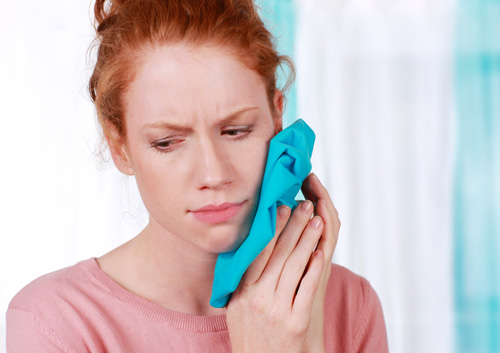
Cold helps limit swelling and dulls soreness during the first day or so. Hold an ice pack wrapped in a thin cloth against your cheek over the graft area for short intervals, with breaks in between, following the timing your surgeon gives you. After the first day or two, your surgeon may suggest switching to gentle warmth if swelling lingers.
Rest With Your Head Elevated
Plan to take it easy for at least the first day or two. Sleeping with an extra pillow keeps your head above your heart, which can reduce throbbing and swelling overnight. Avoid heavy lifting, workouts, and bending over for the period your surgeon recommends, since increased blood pressure can trigger bleeding and soreness at both surgical sites.
Protect the Graft and the Roof of Your Mouth
The graft needs to stay still to attach. Avoid pulling your lip back to look at it, poking it with your tongue, or chewing on that side. If your surgeon gave you a clear protective appliance or a dressing for the palate, wear it as instructed. These barriers cover the donor site so your tongue and food do not rub it, which is one of the most effective ways to cut down on palate pain.
Keep Food and Drinks Cool and Soft
Hot, spicy, acidic, or crunchy foods can sting the donor site and disturb the stitches. Cool or lukewarm soft foods are much more comfortable for the first several days. For meal ideas and a day-by-day plan, see our guide on what to eat after a gum graft.
Keep the Area Clean Without Scrubbing It
Plaque and food debris can irritate healing tissue and raise the risk of infection, which makes pain worse. Your surgeon may prescribe an antimicrobial rinse or suggest gentle salt water rinses after the first day. Do not brush or floss the graft site until you are told it is safe, and keep brushing the rest of your mouth carefully. Let rinse liquid fall out of your mouth instead of spitting forcefully.
Habits That Can Make Gum Graft Pain Worse
Some everyday habits put extra pressure on healing tissue or slow down blood flow to the graft. Avoiding them for as long as your surgeon recommends can make your recovery noticeably more comfortable:
- Smoking and vaping: Tobacco and nicotine reduce blood flow to the gums, which can slow healing, increase soreness, and raise the chance that the graft does not take.
- Drinking through a straw: Suction can pull on the stitches and disturb the blood clot at the donor site.
- Alcohol: Alcohol can irritate the tissue, and it should not be mixed with many pain medicines.
- Checking the graft: Stretching your lip or cheek to look at the area can loosen the tissue and restart soreness.
- Skipping doses early: Letting medicine wear off completely during the first days often means chasing pain that is harder to control.
If you are unsure whether an activity is safe, ask our team. The answer may depend on the type of graft you had and how many sites were treated.
What a Typical Pain Timeline Looks Like
Every patient heals at a different pace, but most recoveries follow a similar pattern. Soreness, mild swelling, and light oozing are common on the first day. Discomfort usually peaks between the first and third days, especially at the palate. From there, most people notice steady improvement, and many return to work or school within a few days, as long as they avoid strenuous activity.
By the end of the first week, pain is typically mild, and your surgeon may see you for a follow-up visit or suture removal. Tenderness when eating firmer foods can last a bit longer, and full tissue maturation takes several weeks. If you want to know what the graft itself should look like at each stage, our article on how to know if your gum graft is healing properly walks through the visual signs.
When Pain Means You Should Call Your Oral Surgeon
Your surgeon will give you a detailed explanation of how to care for your gums until they have healed. Mild pain that improves each day is part of normal recovery. Contact our office promptly if you notice pain that gets worse after the third day, pain that your medicine does not touch, swelling that increases instead of decreasing, bleeding that does not slow with gentle pressure, fever, pus, or a bad taste that will not go away, or if the graft looks loose or out of place.
These signs can point to an infection or another surgical complication, and they are much easier to manage when caught early. If your symptoms are severe or you cannot reach your regular provider after hours, our emergency oral surgery team can help.
Consult a Dedicated Oral Surgeon About Your Questions Now
Exposed roots and receding gums can make teeth sensitive and chewing uncomfortable, and untreated periodontal gum disease can keep the recession going. Led by Dr. Nancy Herbst, who has more than 25 years of experience, our surgeons use minimally invasive techniques and modern technology to cover exposed roots, and we plan each patient’s pain relief and aftercare before the procedure so recovery is as comfortable as possible.
To find out whether a gum graft may help your receding gums, or to ask about your own recovery, reach out to one of our dedicated surgeons in Staten Island, Elizabeth, or Union City by filling out a contact form.
Frequently Asked Questions About Gum Graft Pain
How long does pain last after a gum graft?
Most patients feel the most soreness during the first two to three days, followed by steady improvement. By about one week, discomfort is usually mild. Some tenderness while chewing firmer foods can last a little longer. Pain that increases after the third day is not typical and should be reported to your surgeon.
Why does the roof of my mouth hurt more than the graft?
When tissue is taken from the palate, the donor site is an open wound that your tongue and food touch all day. That constant contact often makes it feel sorer than the graft itself. A protective appliance or dressing, if your surgeon provides one, can cover the area and make eating and talking more comfortable.
Is a gum graft painful during the procedure?
The procedure should not be painful because the area is numbed with local anesthetic, and sedation may also be available. You may feel pressure or movement, but not sharp pain. Soreness usually starts a few hours later when the numbness wears off, which is why many surgeons suggest taking the first dose of pain medicine before then.
Can I use ice after a gum graft?
Yes. A wrapped ice pack held on the outside of your cheek for short intervals during the first day or so can reduce swelling and soreness. Do not place ice directly inside your mouth or against the graft. Follow the timing your surgeon recommends, and ask whether gentle warmth is appropriate later if swelling lingers.
When should I worry about pain after a gum graft?
Call your oral surgeon if pain worsens after the third day, does not respond to the medicine you were told to take, or comes with increasing swelling, fever, pus, a persistent bad taste, bleeding that will not slow with pressure, or a graft that looks loose. These can be signs of infection or another complication that is easier to treat early.
About the Author
Oral and Maxillofacial Surgeon | Owner, Legacy Oral Surgery
Dr. Nancy Herbst has more than 25 years of experience and leads the team of oral and maxillofacial surgeons at Legacy Oral Surgery. She earned her Doctorate of Dental Surgery from New York University College of Dentistry and served as Chief Resident in the Department of Oral and Maxillofacial Surgery at Jersey City Medical Center.