Medically Reviewed by Dr. Nancy Herbst, DDS
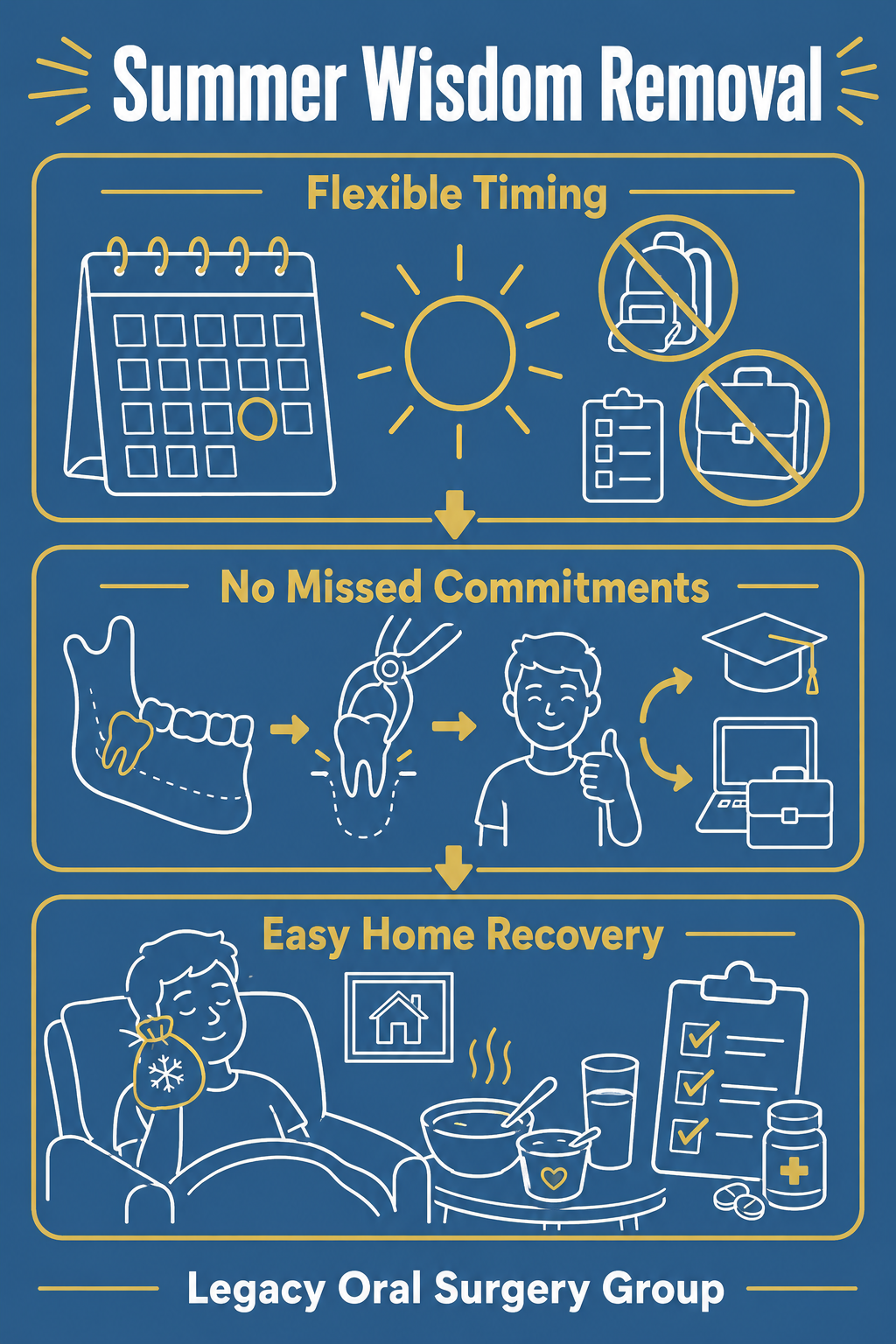
Summer is a good time to schedule wisdom tooth removal because recovery asks for exactly what a school break or a lighter work calendar provides: rest, soft foods, and a few quiet days. Teenagers and young adults often have the most open stretch of the year between June and August, which takes the pressure off missing class, exams, practices, or shifts. That said, the right time to have wisdom teeth removed is ultimately set by what is happening in your mouth, and summer simply makes the logistics easier when removal is already on the table.
At Legacy Oral Surgery Group, we treat over 7,000 patients each year across our Union City, Elizabeth, and Staten Island locations, and wisdom teeth removal is one of our most common procedures. Dr. Nancy Herbst and our team bring more than 35 years of combined experience to every extraction, making sure patients of all ages feel prepared and comfortable from start to finish. If this procedure has been on your radar, exploring your oral surgery treatment options this summer may be worth considering.
Why Does Timing Matter for Wisdom Tooth Removal?
Wisdom teeth, also called third molars, typically emerge between the ages of 17 and 25, a window that lines up almost perfectly with high school and college years. Most people do not have enough room in their jaws for these teeth to come in properly, which means removal is often recommended before they cause crowding, infection, or damage to neighboring teeth. The earlier the procedure is done, the simpler it tends to be, since the roots are not yet fully formed and the surrounding bone is less dense.
Recovery from wisdom tooth extraction takes most patients about a week. During that time, sticking to soft foods, avoiding strenuous activity, and getting adequate rest are key. Those requirements are far easier to manage when school is out and schedules are lighter.
A 2022 systematic review in Annals of Medicine and Surgery found that removing lower wisdom teeth tends to affect quality of life most during the first few days after surgery, and that patients generally improved progressively when they followed their surgeon’s instructions. In practical terms, the hardest part of recovery is short and front-loaded, which is why having those first days free of obligations matters so much.
What Makes Summer Particularly Practical?
Beyond the flexibility in schedules, summer offers several practical advantages for wisdom tooth recovery. Sleeping in, napping as needed, and eating soft foods without any pressure to rush back to class or an exam is a genuine comfort during the healing period. Summer also tends to make post-op care at home more manageable, since there is no need to coordinate recovery around a packed school or work schedule.
No Missed School or Work
One of the most common reasons people delay wisdom tooth removal is not wanting to miss class or take time off at a high-stakes moment. Summer eliminates that concern for students. For working adults, a planned summer break or a slower business period can serve the same purpose, making it easier to take a few days without the stress of falling behind.
Easier Post-Op Care at Home
Recovering from wisdom tooth removal is much easier when you have room in your schedule to actually rest. For the first few days, most patients need cold compresses, saltwater rinses, and soft foods, which can be harder to manage during a busy school or work week. Summer often gives patients more time to sleep, stay hydrated, and avoid unnecessary stress. Following your post-surgical care instructions closely can make a big difference in how smoothly your recovery goes.
Time to Prepare and Follow Up
A relaxed calendar helps before the procedure as well as after it. You can arrange a ride home, stock the kitchen with smoothies, yogurt, and soup, and plan a few low-key days without juggling other commitments. A slower schedule also makes it easier to attend a follow-up visit if your surgeon wants to check how the sites are healing, rather than squeezing it in between classes or meetings.
What Should You Know Before Scheduling?
Booking a consultation in late spring gives you time to plan a procedure for early summer, leaving plenty of recovery time before fall activities begin. Your oral surgeon will take X-rays, assess the position of the teeth, and recommend the best approach. Some extractions are straightforward, while impacted wisdom teeth may require a more involved procedure. Knowing what to expect in advance helps you prepare, and recognizing the signs your wisdom teeth need attention sooner rather than later makes scheduling easier. If you are still deciding whether removal is right for you, our guide on whether wisdom teeth removal is necessary walks through the common reasons it is recommended.
Questions to Settle Ahead of Time
A few details are worth sorting out during your consultation so nothing delays your plans. Ask about the type of anesthesia that fits your situation, since comfort options range from local numbing to sedation, and our overview of sedation options for oral surgery explains how they differ. It also helps to check your insurance benefits and confirm who can drive you home on the day of surgery, because patients who receive sedation should not drive afterward.
Summer Is Not the Only Good Window
Summer works well for many families, but it is not the only workable season. Winter break, spring break, and quieter stretches at work can all be good options, and teeth that are already causing pain, swelling, or infection should not wait for a convenient month. If you are weighing the seasons, our comparison of the ideal season for wisdom tooth extraction covers the tradeoffs in more detail.
How Can You Set Yourself Up for a Smooth Recovery?
Preparation and good habits during the first week can help the process go more comfortably. Most surgeons recommend a short list of simple steps, and keeping them in mind before surgery day makes them easier to follow.
- Plan your first days: Clear your schedule for at least two to three days and arrange for someone to drive you home.
- Stock soft foods: Yogurt, applesauce, mashed potatoes, and smoothies eaten with a spoon are easy on the surgical sites.
- Protect the blood clot: Avoid straws, spitting, smoking, and vigorous rinsing, which can disturb healing.
- Keep your mouth clean gently: Use the rinse and brushing routine your surgeon gives you, and skip anything abrasive near the sites.
- Take medications as directed: Follow your surgeon’s instructions on pain relief and any prescriptions.
Our team also shares practical tips in the dos and don’ts of wisdom tooth extraction aftercare, which is a useful read before your appointment. Every mouth heals a little differently, so your surgeon’s written instructions always take priority over general advice.
Plan Ahead This Summer with Legacy Oral Surgery Group
Summer appointments fill quickly, so Legacy Oral Surgery Group is ready to help you plan. Dr. Herbst and our team take a thorough, patient-centered approach to every extraction, using state-of-the-art technology and sedation options to keep the experience as comfortable as possible. With offices in Union City, Elizabeth, and Staten Island, we make it easy to find a location that works for you.
Taking care of your wisdom teeth this summer means one less thing to manage when the busy season returns. Reach out to our team through our contact page to schedule a consultation at your convenience.
Frequently Asked Questions About Summer Wisdom Teeth Removal
How long does recovery from wisdom tooth removal take?
Most patients feel noticeably better within about a week, with the most discomfort and swelling in the first few days. Complex or impacted extractions can take longer, and the gums and bone continue to heal for several weeks. Your surgeon will give you a timeline based on your specific procedure.
When should I book wisdom teeth removal for the summer?
Scheduling a consultation in late spring is a good starting point, since it leaves time for X-rays, planning, and choosing a date early in the break. Early summer slots tend to fill quickly, so reaching out sooner gives you more choices and leaves recovery time before fall activities begin.
Is it better to have wisdom teeth removed when you are younger?
In many cases, yes. The roots are not fully formed in teenagers and young adults and the surrounding bone is less dense, which often makes removal simpler. Adults can still have wisdom teeth removed successfully, and the decision depends on your X-rays, symptoms, and overall health.
Can I go back to school or work right after surgery?
Most people take a few days to rest, and many return to light activity within two to three days if they feel up to it. Strenuous exercise and sports are usually paused longer. Planning the procedure at the start of a break gives you room to recover without rushing.
Do I have to wait for summer if my wisdom teeth are causing problems?
No. Ongoing pain, swelling, or signs of infection are reasons to be evaluated promptly rather than waiting for a convenient month. Summer is a helpful option for planned removal, but your oral health comes first, and our team can advise on the right timing after an exam.
About the Author
Oral and Maxillofacial Surgeon | Owner, Legacy Oral Surgery
Dr. Nancy Herbst has more than 25 years of experience and leads the team of oral and maxillofacial surgeons at Legacy Oral Surgery. She earned her Doctorate of Dental Surgery from New York University College of Dentistry and served as Chief Resident in the Department of Oral and Maxillofacial Surgery at Jersey City Medical Center.