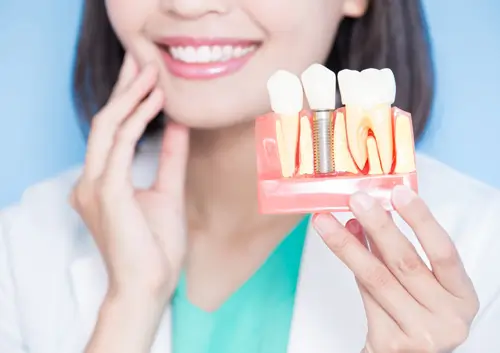
Same-day implants, also called immediate load implants or teeth-in-a-day, allow qualified patients to receive a dental implant and a temporary restoration in a single appointment. For patients who meet the clinical criteria, this approach eliminates the months-long gap between implant placement and receiving a functional tooth, which makes it an appealing option for those who want to minimize the time spent without a complete smile.
At Legacy Oral Surgery and Implants, Dr. Nancy Herbst and our team evaluate candidates for same-day implants on a case-by-case basis, using detailed imaging and a thorough clinical examination to determine whether immediate loading is appropriate. Not every patient is a candidate, and understanding both the benefits and the limitations of this approach is an important part of making a well-informed decision. To discuss whether same-day implants may work for you, submit a message through our contact form and we will be in touch.
What Are Same-Day Implants?
A traditional implant protocol involves placing a titanium post into the jawbone and then waiting three to six months before attaching a permanent crown. This waiting period allows for osseointegration, the biological process through which the implant fuses with the surrounding bone. Same-day implants use a modified protocol in which a temporary crown or bridge is attached to the implant post on the day of surgery, providing immediate aesthetic and functional benefits while osseointegration proceeds.
It is important to distinguish between a temporary crown placed on the day of surgery and a permanent restoration. In most same-day implant protocols, the temporary tooth is designed for light function, meaning the patient can eat soft foods and speak normally, but the final permanent crown is still placed after the implant has fully integrated. What same-day implants eliminate is the period of wearing a removable partial denture or having a visible gap while waiting for the implant to heal.
Who Is a Candidate for Same-Day Implants?
Candidacy for same-day implants depends on several anatomical and health-related factors that determine whether the implant can achieve stable initial fixation while still supporting a temporary restoration.
Adequate Bone Volume and Density
Successful immediate loading requires that the implant achieves strong primary stability at placement. This depends on having sufficient bone volume and density at the implant site. Patients with significant bone loss, either from long-standing tooth loss, periodontal disease, or prior infection, may not have the bone structure necessary to support immediate loading and may require a bone grafting procedure before implant placement is considered.
Good Oral and General Health
Conditions that impair healing, including uncontrolled diabetes, active periodontal disease, certain immune conditions, and heavy tobacco use, increase the risk of implant failure for any implant protocol, but these risks are amplified with immediate loading because the implant must achieve integration while simultaneously bearing some functional load. Patients with well-controlled health conditions can often proceed with same-day implants, but thorough medical and dental evaluation is essential.
Ready to Schedule Your Consultation?
Our board-certified oral surgeons are here to help you find the right treatment. Schedule your appointment today.
The Location of the Missing Tooth
Front teeth are generally more favorable for immediate loading than back teeth because the biting forces on anterior teeth are lower. Posterior teeth, particularly molars, experience significantly greater chewing forces, which can stress an integrating implant if the temporary restoration is placed under those load conditions. Immediate loading in the back of the mouth requires careful case selection and a temporary crown designed to minimize the forces the implant sustains during healing.
The Benefits of Same-Day Implants
For patients who qualify, same-day implants offer several meaningful advantages over a staged implant protocol:
- Immediate aesthetics: Patients leave the appointment with a tooth in place, which is particularly valuable for visible front teeth.
- Preserved soft tissue contour: Placing a temporary crown immediately helps maintain the shape of the gum tissue around the implant site, which contributes to a more natural final result.
- Reduced total treatment time: While osseointegration still takes three to six months, the patient is not without a tooth during that period.
- Fewer appointments: The initial placement and temporary restoration happen simultaneously, reducing the number of surgical visits required.
It is worth noting that same-day implants are not a shortcut through the healing process. The implant still requires the same amount of time to fuse with bone as a traditionally placed implant. The difference is that the patient is not visibly or functionally compromised during that healing window.
When Same-Day Implants May Not Be the Right Choice
Immediate loading is not appropriate for every patient, and understanding when a staged protocol is the safer approach is just as important as understanding when same-day implants are possible. Patients with significant bone deficiency may need a bone graft months before implant placement can occur. Those with uncontrolled systemic conditions need to achieve stable health before undergoing surgery. Patients replacing molars or multiple adjacent teeth require particularly careful evaluation of load factors before immediate loading is considered.
In these situations, a staged protocol, though longer, reduces the risk of implant failure and often leads to a more predictable long-term outcome. Dr. Herbst and our team are candid about these considerations during consultation so that each patient can make a decision grounded in realistic expectations.
Frequently Asked Questions About Same-Day Implants
Are same-day implants as strong as traditional implants?
When placed in appropriate candidates, same-day implants can achieve the same long-term integration and stability as implants placed using a staged protocol. The critical difference is the initial period following placement, during which the temporary restoration must be managed carefully to avoid placing excessive force on the integrating implant. For well-selected patients who follow post-operative care instructions and bite restrictions, same-day implants can achieve outcomes comparable to those of traditional implants over the long term.
How long does a same-day implant procedure take?
The appointment for same-day implant placement, including the attachment of the temporary crown, typically takes between two and four hours depending on the complexity of the case and whether any additional procedures such as a tooth extraction are required. Pre-treatment planning, which includes imaging and a consultation visit, happens prior to the placement appointment. After the procedure, you will leave with a temporary tooth in place and will return for follow-up appointments to monitor healing before the permanent restoration is placed.
What can I eat after getting same-day implants?
During the healing period following same-day implant placement, a soft food diet is strongly recommended to minimize the load on the integrating implant. Hard, crunchy, or chewy foods can apply forces that interfere with osseointegration. Most patients follow a soft diet for several weeks before gradually reintroducing more varied foods as directed by their oral surgeon. Once the permanent crown is in place and integration has been confirmed, you can typically return to a normal diet without restrictions.
Does insurance cover same-day implants?
Coverage for dental implants varies significantly by insurance plan. Some dental insurance plans provide partial coverage for implant placement, while many do not cover implants at all. The temporary and permanent restorations associated with same-day implants may be covered under different benefit categories. Our team can help you review your insurance coverage and understand your out-of-pocket costs before committing to treatment. Financing options are also available for patients who want to manage the cost over time.
Can same-day implants be used to replace multiple missing teeth?
Yes. Same-day implant protocols can be used for single-tooth replacement as well as for full-arch restorations, sometimes referred to as All-on-4 or similar approaches, where multiple implants support an entire arch of teeth placed the same day as surgery. Full-arch immediate loading is a more complex procedure and requires careful surgical planning and significant bone volume, but it is a well-established option for patients who have lost or are losing all of their teeth in one arch. Your oral surgeon will evaluate whether you are a candidate based on your specific bone anatomy and health history.