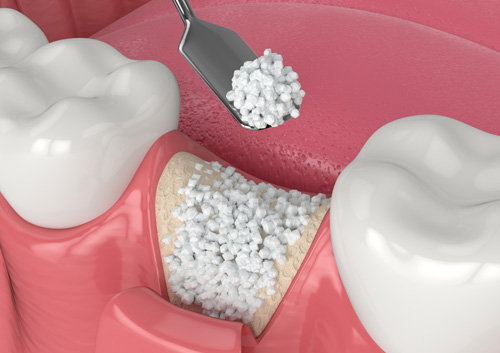
Guided bone and tissue regeneration is a surgical technique used to rebuild bone and gum tissue that has been lost to periodontal disease, trauma, or tooth extraction. When the structures supporting your teeth break down, the body tends to fill damaged areas with soft tissue rather than the denser bone needed for long-term stability. This procedure creates a protected space where bone-forming cells can do their work, often restoring enough bone volume to make dental implant placement possible in areas that would otherwise lack adequate support.
At Legacy Oral Surgery Group, Dr. Nancy Herbst, Dr. David Farkas, and Dr. Hillel Kaye bring more than 35 years of combined experience to guided regeneration procedures across our Union City, Elizabeth, and Staten Island locations. Our team develops individualized treatment plans based on each patient’s bone anatomy, tissue quality, and long-term goals, whether that is implant placement, improved periodontal health, or both.
Guided Bone Regeneration vs. Guided Tissue Regeneration
The terms guided bone regeneration (GBR) and guided tissue regeneration (GTR) are related but describe distinct goals. Guided tissue regeneration focuses on restoring the soft connective tissue structures around a tooth, including the periodontal ligament and cementum, to reattach the tooth to surrounding bone after periodontal disease has caused detachment. Guided bone regeneration focuses specifically on rebuilding bone volume in areas where it has diminished.
In practice, both techniques use barrier membranes and are often performed together, since periodontal bone defects frequently involve both tissue and bone loss simultaneously. Your oral surgeon will assess which approach is appropriate based on the type and extent of your specific defect and how each area needs to be restored.
Who Is a Good Candidate?
Your teeth are held in place by a complex system that includes the jawbone, the periodontal ligament, the cementum covering each root, and the surrounding gum tissue. When this system deteriorates due to periodontal disease or other causes, the teeth lose support and become vulnerable to infection and eventual loss. Guided regeneration procedures help restore this system when conservative treatments such as scaling and root planing have not fully resolved the problem.
You may be a candidate for this procedure if you experience one or more of the following:
- Insufficient bone volume at a site planned for dental implants
- Gum recession with exposed root surfaces
- Deep periodontal pockets that do not respond to non-surgical cleaning
- Bone defects caused by periodontal disease, abscess, or trauma
- Wide spaces between teeth caused by bone loss
- Inadequate bone following tooth extraction
Your oral surgeon will perform a comprehensive exam, including three-dimensional imaging, to evaluate bone density and identify the most effective approach for your situation. If your disease is less advanced, your doctor may recommend conservative treatments before surgical intervention is considered.
How Barrier Membranes Work
The central component of both GBR and GTR is the barrier membrane, a material placed over the bone graft or defect site to control what types of cells enter the healing space. Bone-forming cells called osteoblasts move more slowly than soft tissue cells. Without a barrier, the faster-migrating soft tissue fills the space before bone can establish itself, preventing adequate regeneration.
The membrane holds this space open and blocks soft tissue from invading the healing zone, giving osteoblasts the time they need to deposit new bone. There are two main categories:
Resorbable membranes are made from materials such as collagen that dissolve naturally in the body over several months. They eliminate the need for a second surgery to remove the membrane and are the most commonly used option for most clinical situations.
Non-resorbable membranes, typically made from expanded polytetrafluoroethylene or titanium mesh, are more rigid and provide stronger space maintenance for larger defects. They require a second procedure for removal once healing is underway but are preferred when greater structural support is needed.
Ready to Schedule Your Consultation?
Our board-certified oral surgeons are here to help you find the right treatment. Schedule your appointment today.
What to Expect During the Procedure
Guided bone and tissue regeneration is typically performed under local anesthesia, with sedation available for patients who prefer a more comfortable experience. The procedure follows a consistent sequence, though the specifics depend on the extent of bone or tissue loss and whether implant placement is incorporated into the same appointment.
Your oral surgeon will fold back the gum tissue to access the affected bone and root surfaces. Bacterial deposits and infected tissue are cleaned from the area, and the root surface is conditioned to encourage tissue reattachment. Bone grafting material is placed to fill the defect and support the surrounding bone, using material sourced from your own body, a donor bank, or a synthetic source depending on the clinical situation. The barrier membrane is then positioned over the graft, and tissue-stimulating proteins may be applied to activate your body’s natural regenerative response. The gum tissue is carefully closed over the site, and most patients can return to light daily activities within a few days.
Recovery and Healing Timeline
Recovery from guided regeneration is gradual. Soft tissue healing typically takes two to four weeks. During this period, you will follow a soft-food diet, take prescribed medications, and avoid anything that could disturb the surgical site, including smoking, using straws, or vigorous rinsing.
Bone formation takes considerably longer. The grafting material begins to be replaced by your own bone cells over the following months, a process that typically takes three to six months for smaller defects and six to nine months or longer for more extensive bone loss. According to research reviewed by the National Center for Biotechnology Information, guided regeneration techniques applied to appropriate clinical cases support bone regeneration outcomes that compare favorably with other surgical approaches for managing periodontal bone defects.
If the goal of your procedure is to prepare the site for bone grafting and implant placement, your surgeon will confirm through imaging when bone has matured sufficiently before proceeding. This milestone is assessed carefully rather than assumed on a fixed calendar.
Caring for Your Results Long-Term
After guided regeneration, maintaining excellent oral hygiene and attending regular follow-up appointments are the most important factors in protecting your results. The new bone that forms is real bone, and it is vulnerable to the same periodontal forces that caused the original loss. Patients who do not smoke, control systemic health conditions such as diabetes, and keep up with professional cleanings consistently achieve stronger, more lasting outcomes.
If implants are part of your long-term plan, the regenerated bone must reach sufficient density before placement. Your oral surgeon will monitor this progress and let you know when you are ready to move to the next step. Rushing the timeline increases the risk of implant failure, so patience during the healing phase directly affects long-term success.
Schedule a Consultation at Legacy Oral Surgery Group
Dr. Herbst, Dr. Farkas, and Dr. Kaye evaluate each patient’s bone and tissue health thoroughly before recommending guided regeneration. Not every patient with bone loss requires the same membrane or graft approach, and our team takes the time to review imaging, assess tissue quality, and explain your options clearly so you understand what the procedure involves and what to expect during recovery.
If you are dealing with bone or tissue loss from periodontal disease, planning for future implant placement, or concerned about the health of your jaw, we invite you to contact our office to schedule a consultation at our Union City, Elizabeth, or Staten Island location and take the next step toward restoring your oral health.
Frequently Asked Questions About Guided Bone and Tissue Regeneration
How long does guided bone regeneration take to heal?
Soft tissue healing after guided regeneration takes two to four weeks, but bone formation is a slower process. Smaller defects typically show sufficient new bone growth within three to six months, while larger or more complex sites may require six to nine months or longer before implant placement can proceed. Your oral surgeon will confirm readiness through imaging rather than on a fixed timeline.
Is guided bone and tissue regeneration painful?
The procedure is performed under local anesthesia, so you should not feel pain during surgery. Sedation is available for patients who prefer added comfort. After the anesthesia wears off, mild to moderate soreness is normal for the first few days and is manageable with prescribed pain medication and over-the-counter anti-inflammatories. Most patients find discomfort significantly reduced within the first week.
What is the difference between a resorbable and a non-resorbable membrane?
Resorbable membranes, usually made from collagen, dissolve naturally over several months without requiring a second surgery. Non-resorbable membranes are more rigid, typically made from expanded polytetrafluoroethylene or titanium mesh, and provide stronger support for larger defects. They must be removed in a second procedure once healing is underway. Your surgeon will recommend the appropriate type based on the size and location of your defect.
Can I get a dental implant at the same time as guided bone regeneration?
In some cases, yes. When there is enough existing bone to stabilize an implant, a surgeon may place the implant and perform guided bone regeneration simultaneously to build up the surrounding bone. In other cases, the defect is too large to support immediate implant placement, and the regeneration procedure must be completed and allowed to heal before the implant is placed. Your oral surgeon will assess your bone volume to determine the appropriate sequence.
What should I avoid after guided bone and tissue regeneration surgery?
Avoid smoking, using straws, vigorous rinsing, and strenuous physical activity for at least two weeks following surgery. These activities can disrupt the surgical site, dislodge the membrane or graft, and impair healing. Follow a soft-food diet and all post-operative instructions your oral surgeon provides. Attending scheduled follow-up appointments is essential for monitoring bone formation and catching any complications early.