Medically Reviewed by Dr. Nancy Herbst, DDS
A fall on ice can knock out a tooth, crack a front tooth at the gum line, loosen several teeth at once, or fracture the jaw, and what you do in the first hour often decides whether a tooth can be saved. The short version: find any knocked-out tooth, hold it by the crown, put it back in the socket or into milk, control bleeding with gauze, and get seen the same day. If you hit your head hard, lost consciousness, or have trouble breathing, go to the emergency room first.
At Legacy Oral Surgery, our oral and maxillofacial surgeons treat winter-related dental trauma at our offices in Union City and Elizabeth, New Jersey, and on Staten Island. Our team sees more than 7,000 patients a year and brings over 40 years of combined surgical experience to injuries of the teeth, jaws, and face. Below is what we want every patient in North Jersey and Staten Island to know before the next ice storm.
Why Winter Falls Are So Hard on Your Teeth and Jaw
Most winter slips happen fast. One foot hits black ice, the other cannot catch you, and your body pitches forward or sideways before your arms react. If your hands are in your pockets, full of grocery bags, or holding a phone, your chin, mouth, and upper front teeth often take the first impact against concrete, a step edge, or a car door. That is why winter falls tend to injure the upper incisors and the lower jaw more than other parts of the mouth.
The force of a face-first fall travels through the teeth into the bone that holds them. A single blow can cause more than one kind of injury at the same time, including:
- Tooth avulsion: teeth completely knocked out of their sockets
- Fractured or displaced teeth: cracked, chipped, or shifted teeth that may require repositioning
- Jaw fractures: breaks that affect bite alignment and facial structure, often near the chin or the joint in front of the ear
- Soft tissue lacerations: cuts to the lips, gums, tongue, and inner cheeks
Injuries are a major driver of hospital visits nationwide. Using its 2022 survey data, the Centers for Disease Control and Prevention reports roughly 43.5 million injury-related visits annually to emergency departments. Not every one of those involves a fall or the mouth, but icy months add a steady stream of facial injuries that need an oral surgeon’s attention once a patient is medically stable.
Winter Prevention That Protects Your Face
General fall prevention advice applies here, but a few habits specifically lower your chances of landing on your face rather than your hands or hip. Small changes make a real difference when sidewalks refreeze overnight.
Footwear and Traction
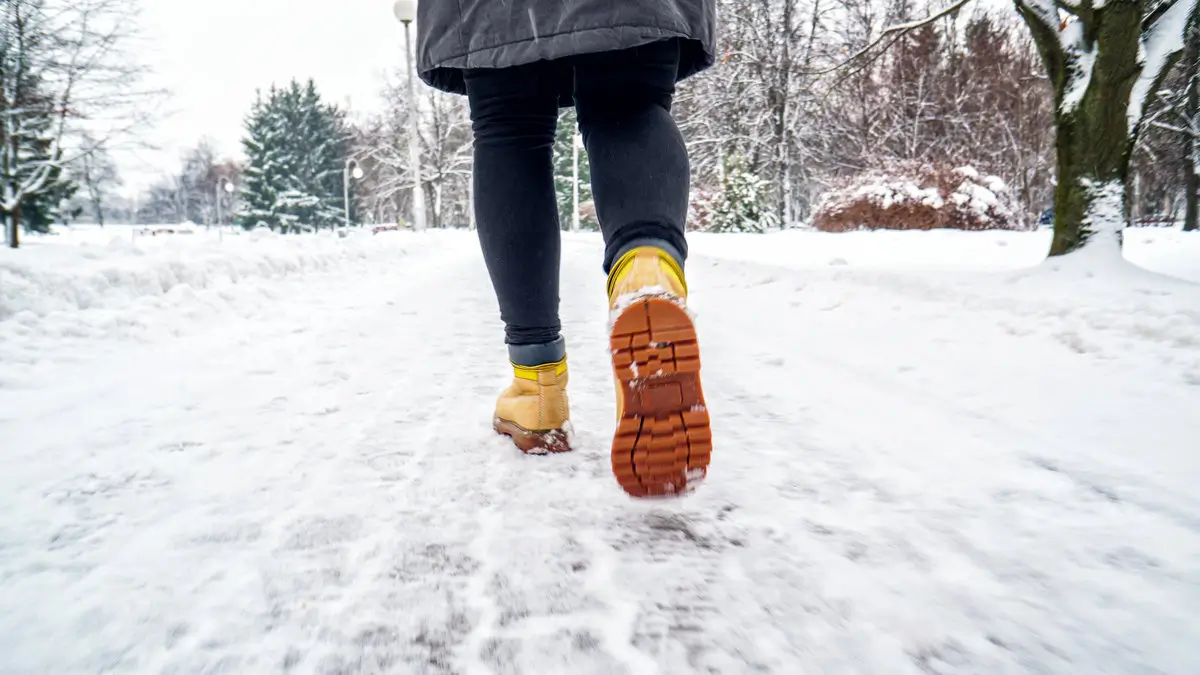
Choose boots with deep, soft rubber treads rather than flat or worn soles, and consider slip-on ice cleats for early morning walks, dog walks, and trips to the train or bus. Remove cleats before walking on smooth indoor floors, where the metal can make you slide. Walk with shorter steps and keep your weight centered over your feet, the way you would on a slick deck.
Keep Your Hands Free
Hands in pockets are one of the most common reasons a slip becomes a dental injury. Wear gloves instead of tucking your hands away, use a backpack or crossbody bag instead of carrying bags in both hands, and put your phone away on stairs and curbs. Free hands let you break a fall with your arms, which protects your face even when it does not prevent the fall.
Know the Local Trouble Spots
Across Hudson County, Union County, and Staten Island, the same places freeze again and again: building entrances and stoops, the shaded side of the street, parking garage ramps, sidewalks below gutters and downspouts, and bus stop curbs where slush packs down. Midday melt that refreezes after sunset is especially slick. At home, keep exterior walkways lit, clear snow before it gets packed, and spread salt or sand on steps and paths.
Mouthguards for Winter Sports
Ice skating, hockey, sledding, and snowboarding all carry a risk of a face-first fall. A properly fitted mouthguard can lower the chance of a broken or knocked-out tooth during these activities. Custom mouthguards fit more securely than store-bought versions, and you can ask your dentist or our team about having one made before the season starts.
First Aid in the First Hour After a Fall
Quick action following a dental injury can make a real difference between saving and losing a tooth. Check yourself or the injured person for signs of a head or neck injury first, then turn to the mouth. The steps below follow the general first-aid approach recommended by the International Association of Dental Traumatology in its 2020 guidelines on avulsed permanent teeth.
Knocked-Out Teeth
For a knocked-out adult tooth, time is the most important factor. Find the tooth and pick it up by the crown, the white chewing part, never by the root. If it is dirty, rinse it briefly under cold running water without scrubbing, and do not wipe off any tissue clinging to the root. If you can, gently push it back into its socket facing the right way, then hold it in place by biting softly on clean gauze or a cloth.
If you cannot put the tooth back, keep it moist. Cold milk is the most practical option for most people. Saline or holding the tooth inside the cheek also works for an adult who will not swallow it. Do not store it in plain water, and do not wrap it in a dry tissue, since root cells begin to die as they dry out. Then come in right away. The longer a tooth stays out of its socket, the lower the chance it can be saved long term.
One exception matters for families: do not try to put a knocked-out baby tooth back in. Replanting a primary tooth can damage the permanent tooth developing underneath. Keep the tooth, control the bleeding, and have your child evaluated.
Fractured Teeth
When a tooth cracks or chips, rinse your mouth with warm water and hold a cold compress against the outside of your face to reduce swelling. Save any broken tooth pieces in milk or a damp cloth and bring them with you, since a fragment can sometimes be bonded back on. A fracture that shows pink or red in the center, or that causes sharp pain with air or cold, may involve the nerve and should be seen the same day.
Loosened or Pushed-In Teeth
A tooth that is wobbly, pushed back, pulled partly out, or driven up into the gum has been displaced. Do not try to wiggle it or force it into place. Bite gently on gauze to keep it steady, avoid chewing on that side, and get it evaluated quickly. These teeth often need to be repositioned and splinted while the supporting tissue heals.
Oral Lacerations
For bleeding from cuts on the lips, tongue, or gums, apply firm, steady pressure with clean gauze or a cloth for several minutes without lifting to check. Use over-the-counter pain medication as needed, but avoid aspirin, which can increase bleeding. Deep cuts, cuts that cross the edge of the lip, and bleeding that will not slow down usually need sutures.
Contact Legacy Oral Surgery immediately for emergency care. Our team can give you guidance when you call and arrange urgent treatment to address your injuries.
ER or Oral Surgeon? How to Decide After Slipping on Ice
A fall that injures your mouth can also injure your head and neck, so the first question is whether you need a hospital before you need a surgeon. Go to the emergency room or call 911 if the person lost consciousness, seems confused, has repeated vomiting, has neck pain or numbness in the arms, is having trouble breathing or swallowing, or has bleeding that will not stop despite firm pressure. A suspected jaw fracture from a hard fall also belongs in the ER first, especially if other injuries are possible.
If none of those warning signs are present, an oral surgery office is usually the better first stop for a knocked-out, broken, or loosened tooth. Hospital emergency departments can manage pain, infection, and life-threatening problems, but they often are not set up to replant and splint teeth. For a fuller breakdown, see our guide to choosing between emergency dental care and the ER. If you do go to the hospital first, follow up with an oral surgeon soon after, since many facial injuries need surgical follow-up care. Our article on why an oral surgeon visit matters after facial trauma explains what that visit looks for.
Signs of a Jaw Injury You Should Not Ignore
Jaw fractures are easy to underestimate in the first few hours, when swelling and adrenaline mask what happened. Pay attention if your teeth no longer meet the way they used to, if your bite feels shifted to one side, or if you cannot open or close your mouth fully without pain. Numbness of the lower lip or chin, a visible step or gap in the gum line, bleeding from the gums between teeth, and swelling or bruising under the chin or in front of the ear are also red flags.
A chin strike can also cause a fracture near the jaw joint even when the chin itself looks fine. If any of these signs appear after a winter fall, keep your jaw still, avoid chewing, and get imaging promptly. Early evaluation helps the bone heal in the right position and protects your bite over the long term.
Emergency and Reconstructive Care at Legacy Oral Surgery
At Legacy Oral Surgery, we care for patients with dental trauma from winter accidents throughout North Jersey and Staten Island. Dr. Nancy Herbst and our surgical team provide facial trauma treatment, tooth replantation and stabilization, jaw fracture repair, soft tissue repair, and dental implant placement for teeth that cannot be saved.
Treatment depends on what the fall did. A knocked-out tooth that can be replanted is usually cleaned, placed back in the socket, and held with a flexible splint for a few weeks, and many replanted adult teeth later need root canal treatment, which we coordinate with your dentist or an endodontist. Loosened teeth are repositioned and splinted. Jaw fractures may be stabilized with small plates or by temporarily holding the jaws together while the bone heals. Cuts inside the mouth are cleaned and closed with sutures. When a tooth cannot be saved, a bone graft and dental implant may be options once the area has healed, and 3D imaging helps our surgeons see fractures and plan treatment.
Winter Trauma Care in Union City, Elizabeth, and Staten Island
Dr. Herbst has more than 25 years of experience in oral and maxillofacial surgery. She earned her Doctorate of Dental Surgery from New York University College of Dentistry and served as Chief Resident in Oral and Maxillofacial Surgery at Jersey City Medical Center. Our team offers in-office IV sedation and general anesthesia for patient comfort, and no referral is needed for an emergency visit. Patients can reach us through our Staten Island emergency oral surgeon office or our emergency oral surgery team in Elizabeth, as well as our Union City location.
Dental emergencies do not wait for a convenient time, and neither should you after a fall on the ice. Whether you need urgent trauma care today or reconstruction after a winter injury, our team can evaluate the damage and explain your options in plain language. Contact our office today to request an urgent visit or schedule a consultation.
Frequently Asked Questions About Winter Dental Injuries
How long do I have to save a knocked-out tooth?
The sooner the better. A tooth that is put back in its socket within minutes has the best chance of reattaching, and the odds drop the longer the root stays dry. If you cannot replant it, keep it in cold milk, saline, or inside an adult’s cheek and get to an oral surgeon or dentist right away rather than waiting until the next day.
Can I put a knocked-out tooth in water?
A quick rinse under cold running water is fine if the tooth is dirty, but do not store it in water. Plain water can damage the living cells on the root surface. Cold milk is the easiest storage option for most people, and saline or the inside of an adult’s cheek also work while you travel to care.
Should I go to the ER or an oral surgeon after slipping on ice?
Go to the ER first if there was a loss of consciousness, confusion, vomiting, neck pain, trouble breathing or swallowing, bleeding that will not stop, or a suspected jaw fracture from a hard fall. If the injury is limited to the teeth, gums, or lips and you feel otherwise well, an oral surgery office is usually the faster path to having teeth replanted, repositioned, or repaired.
Should a knocked-out baby tooth be put back in?
No. Baby teeth are generally not replanted because doing so can harm the permanent tooth forming underneath. Keep the tooth, apply gentle pressure with gauze to stop the bleeding, and have your child seen promptly so the area and the developing adult teeth can be checked.
How can I tell if my jaw is broken after a fall?
Common signs include a bite that suddenly feels wrong, pain when opening or closing, numbness in the lower lip or chin, swelling or bruising along the jaw or in front of the ear, and a visible step in the gum line. Only imaging can confirm a fracture, so keep the jaw still and get evaluated quickly if any of these appear.
Does a chipped tooth from a fall need urgent care?
A small chip with no pain can usually wait for a regular dental visit. A larger break, a fracture that shows pink or red in the center, sharp sensitivity to air or cold, or a tooth that also feels loose should be seen the same day, since the nerve or the supporting bone may be involved.
About the Author
Oral and Maxillofacial Surgeon | Owner, Legacy Oral Surgery
Dr. Nancy Herbst has more than 25 years of experience and leads the team of oral and maxillofacial surgeons at Legacy Oral Surgery. She earned her Doctorate of Dental Surgery from New York University College of Dentistry and served as Chief Resident in the Department of Oral and Maxillofacial Surgery at Jersey City Medical Center.