When you’ve lost teeth, whether one or many, the path forward isn’t always obvious, and the stakes feel higher than a simple dental decision. Both dental implants and implant-supported dentures can restore your smile, your bite, and your confidence, but they serve different needs, and choosing the wrong option can mean more procedures, more cost, and a result that doesn’t quite fit your life.
At Legacy Oral Surgery Group, we help patients across Union City, Elizabeth, and Staten Island work through exactly this decision every day. With Dr. Nancy Herbst leading a team with over 35 years of combined experience in every consultation, we approach tooth replacement not as a one-size-fits-all recommendation but as a personalized plan tailored to your bone health, lifestyle, and long-term goals. Our treatments and implant services are designed to give every patient a clear, confident path forward.
What’s the Difference Between These Two Options?
Both solutions use implant posts surgically placed into the jawbone, but the prosthetics they support are very different. Understanding the distinction is the first step toward making the right choice.
Single Dental Implants
A single dental implant replaces one missing tooth from root to crown. A titanium post is placed directly into the jawbone, where it fuses with the surrounding bone through a process called osseointegration. Once healed, a custom crown is attached on top, creating a replacement that looks, feels, and functions like a natural tooth. Single implants are independent — they don’t rely on neighboring teeth for support, and they stimulate the jawbone the way a natural root does.
Implant-Supported Dentures
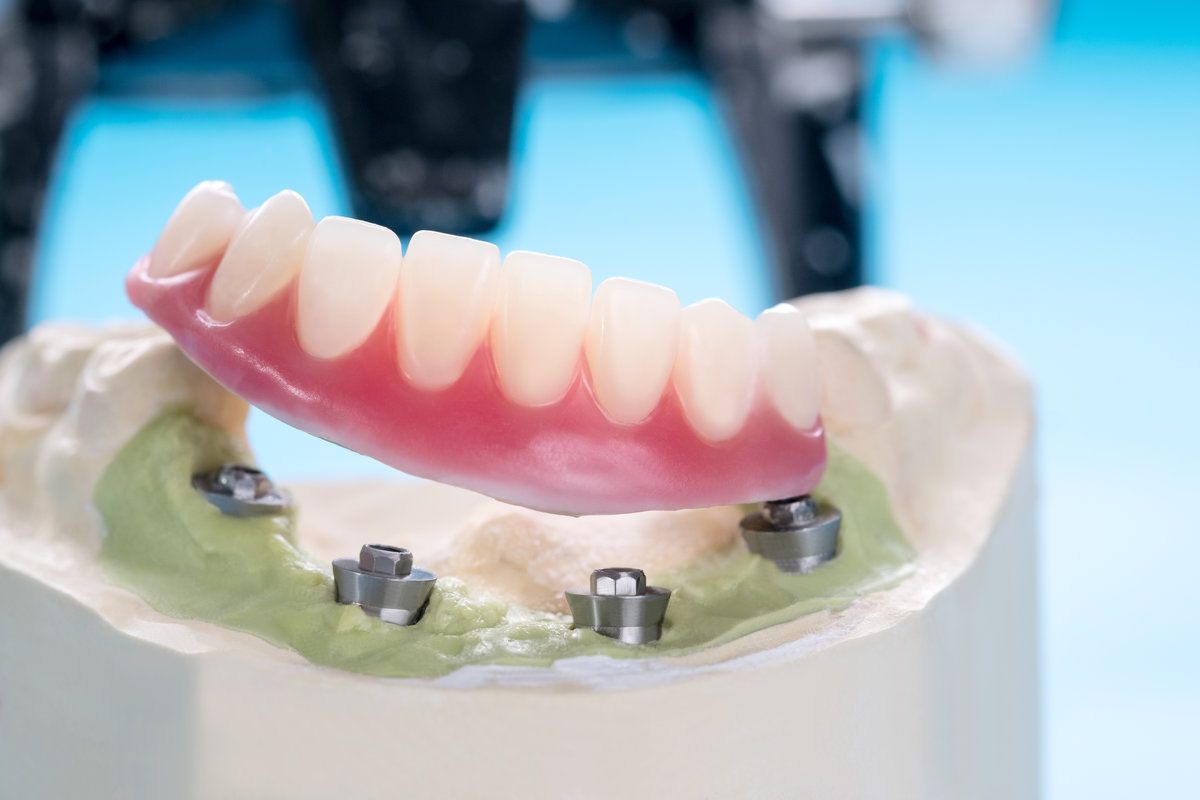
Implant-supported dentures are designed for patients who are missing most or all of their teeth in a given arch. Rather than a single crown, a full or partial denture prosthetic is anchored to multiple implant posts. This gives dentures a level of stability that traditional removable dentures simply cannot match. Some implant-supported dentures are removable for cleaning, while others are fixed permanently in place.
How Do You Know Which One Is Right for You?
This is the question we hear most often, and the answer depends on several clinical and personal factors. Neither option is universally better — both can deliver excellent, long-lasting results in the right patient.
Number of Missing Teeth
The most straightforward factor is how many teeth you’ve lost. If you’re missing a single tooth or a small number of individual teeth in different areas of the mouth, single implants are typically the most precise solution. If you’re missing an entire arch or a significant portion of your teeth, implant-supported dentures are more efficient and cost-effective than placing individual implants for each missing tooth. As we explain in our overview of full mouth restoration options, the scope of tooth loss often determines the most appropriate restoration path.
Bone Density and Volume
Both procedures require adequate jawbone to anchor the implant posts. However, single implants placed in specific positions may require a higher degree of bone density at each site, while implant-supported dentures can sometimes be positioned to work around areas of existing bone loss.
According to the American Association of Oral and Maxillofacial Surgeons, dental implants require sufficient bone mass and density to provide a stable base, and conserving bone after tooth loss increases the chances of successful long-term implant outcomes. Patients with significant bone loss may need a bone graft before either procedure.
Budget and Cost Considerations
Single implants, placed one at a time, carry a per-tooth cost that adds up quickly when multiple teeth are missing. Implant-supported dentures anchor an entire arch using fewer posts, making them a more economical option for patients replacing many teeth at once. That said, the right investment is the one that meets your clinical needs, and we always make sure our patients have a complete picture of what to expect financially before moving forward.
What Factors Does Your Oral Surgeon Evaluate?
Before we make any recommendation, we conduct a thorough clinical evaluation. The factors we assess include:
- Bone volume and density at each potential implant site
- The number and location of missing teeth
- Your overall oral and systemic health
- Whether existing teeth need to be extracted before placement
- Your lifestyle preferences regarding maintenance and removability
This evaluation informs a treatment plan that is specific to you, not a general template. Pre-surgical planning is one of the most important steps in the entire process, and it’s where we set the foundation for a successful outcome.
Choose Legacy Oral Surgery Group for Your Implant Consultation
At Legacy Oral Surgery Group, we see over 7,000 patients a year across our Union City, Elizabeth, and Staten Island locations, and we bring over 35 years of combined professional experience to every case. Dr. Nancy Herbst, Dr. David Farkas, and Dr. Hillel Kaye use the latest equipment, innovative techniques, and state-of-the-art methodology to ensure every patient receives the level of care their oral health deserves. We are with our patients before, during, and after their surgical experience because that’s what a truly comprehensive care team looks like.
Whether you’re a candidate for a single implant, a full arch restoration, or something in between, we’re here to help you find the right answer. Contact our office to schedule your consultation and take the first step toward a complete, confident smile.