If you are currently in orthodontic treatment and your dentist or specialist has recommended oral surgery, your first question is probably, “Does having braces or aligners complicate things?” In most cases, the answer is no. Oral surgery and orthodontic treatment are not only compatible, but they are also often planned together, with one supporting the other toward a more complete and lasting result.
At Legacy Oral Surgery Group, we work with patients at every stage of their oral health journey, including those actively undergoing orthodontic treatment. With more than 35 years of combined experience and over 7,000 patients treated annually across our Union City, Elizabeth, and Staten Island locations, our team understands how to coordinate care alongside your orthodontist. If you have questions about your oral surgery treatment options, here is what you should know.
Can Oral Surgery Be Performed on Patients in Braces or Aligners?
Yes, oral surgery can absolutely be performed on patients who are currently wearing braces or clear aligners. In fact, some of the most common oral surgery procedures are performed precisely because a patient is in orthodontic treatment. The key is communication between your oral surgeon and your orthodontist so that timing and sequencing are handled correctly. In many cases, the two providers will coordinate directly to ensure the surgical outcome supports your orthodontic progress rather than disrupting it.
Common Procedures Performed Alongside Orthodontic Treatment
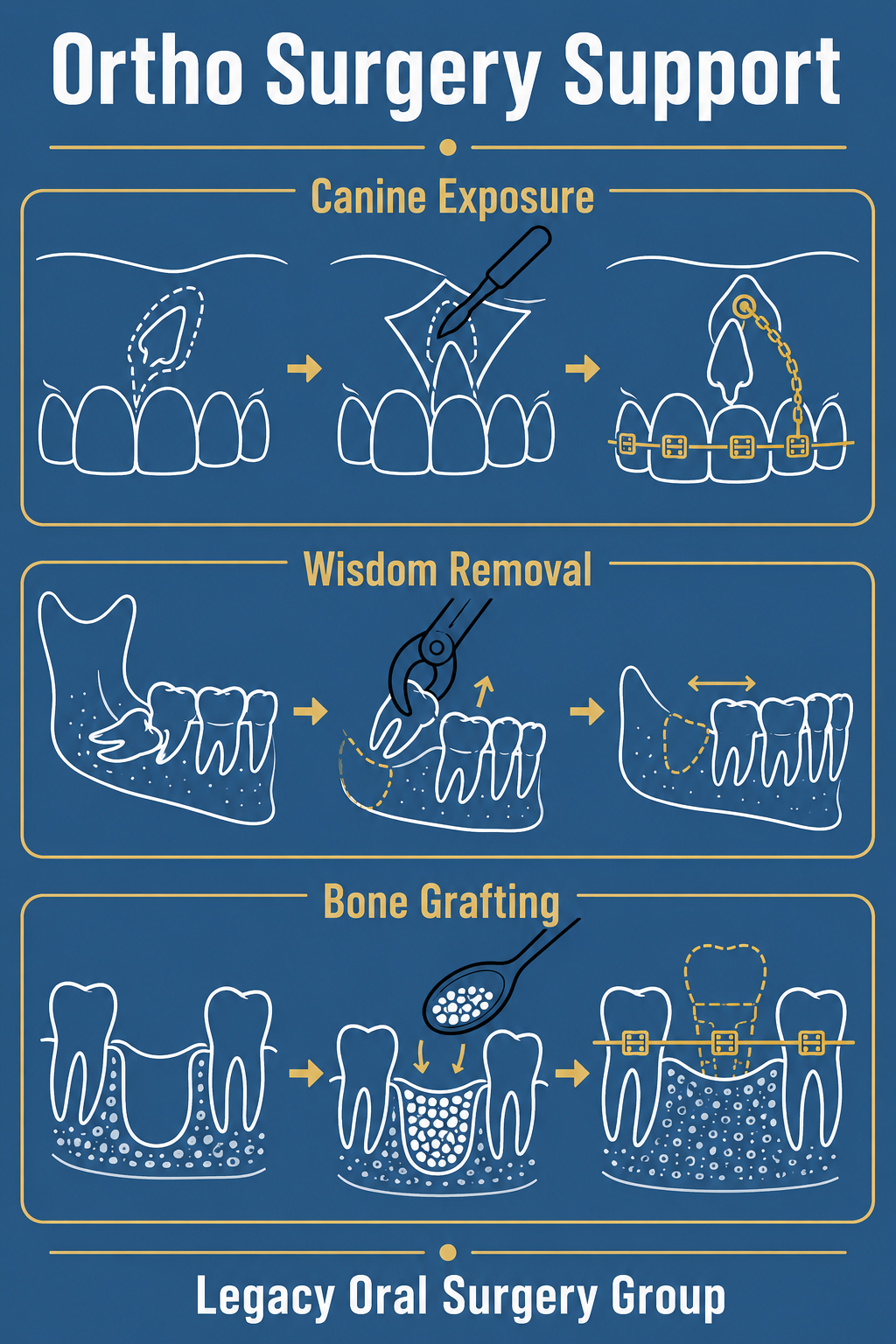
Several oral surgery procedures are routinely performed on patients who are mid-treatment with braces or aligners. A published study in PubMed Central on the surgical-orthodontic management of impacted canines highlights that timing and coordination between the oral surgeon and orthodontist are critical to achieving successful outcomes. Some of the most common surgical procedures that occur alongside active orthodontic treatment include:
- Impacted canine exposure: Surgically uncovering an impacted canine so the orthodontist can guide it into the proper position is one of the most common combined surgical-orthodontic procedures performed.
- Wisdom tooth removal: Extracting wisdom teeth during orthodontic treatment is often recommended to prevent them from crowding teeth that are actively being aligned.
- Bone grafting: Some patients require bone grafting to create a stable foundation for later tooth replacement, and this can be scheduled at a point in orthodontic treatment that minimizes disruption.
Your oral surgeon and orthodontist will determine the appropriate sequencing based on your specific treatment plan. Providers who communicate well make a significant difference in results.
Does Wearing Braces or Aligners Change How Surgery Is Performed?
Having orthodontic hardware in place generally does not prevent surgery, but it may require additional coordination before and after the procedure. For patients with traditional braces, your orthodontist may need to remove wires or brackets in the area near the surgical site before the procedure. For Invisalign patients, trays are typically removed before surgery and should not be reinserted until your surgeon confirms the tissue has healed enough to do so comfortably. Our pre-surgical care guidelines include instructions that account for patients with orthodontic appliances in place.
Recovery after oral surgery does not mean your orthodontic progress stops. Your orthodontist may simply pause adjustments for a brief window while the surgical site heals. The length of that pause depends on the procedure, but most patients return to their regular orthodontic appointments within a few weeks. You can also review our post-surgical care guidelines to prepare for recovery.
Does Surgery Ever Need to Happen Before Orthodontics Begins?
There are situations in which oral surgery should be completed before orthodontic treatment begins rather than during it. If a patient has significant bone loss, untreated periodontal disease, or teeth that need to be removed to create space in the arch, addressing those issues first gives orthodontic treatment a cleaner foundation to work from. Similarly, some patients who need jaw surgery will complete part of their orthodontic treatment beforehand, undergo surgery, and then resume orthodontic treatment to finalize their bite. Surgical procedures and orthodontic treatment are more connected than many patients realize, and your oral surgeon can help determine the right sequence for your specific needs.
Patients who need surgical intervention during active orthodontic treatment often benefit from the fact that teeth in motion heal differently than stationary teeth. Your surgeon can advise on whether the timing of your procedure works in your favor based on where you are in treatment. Involving an oral surgeon early in the planning process tends to produce better outcomes for patients with more involved needs, including those considering treatment for impacted canines.
Trust Legacy Oral Surgery Group With Your Orthodontic Needs
At Legacy Oral Surgery Group, Dr. Nancy Herbst and our team have more than 25 years of experience in oral and maxillofacial surgery, working with patients whose care involves multiple providers. We take a thorough approach to treatment planning and communicate directly with referring orthodontists to ensure your surgical and orthodontic goals are aligned. We are equipped to handle the full range of oral surgery needs that may arise during orthodontic treatment.
If you are in braces or aligners and have been told you may need oral surgery, do not put it off. Reach out to us through our contact page, and we will help you take the right next step.