Medically Reviewed by Dr. Nancy Herbst, DDS
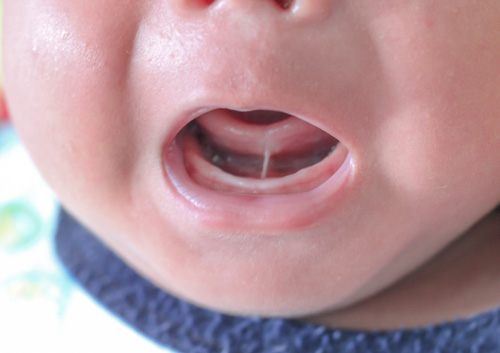
Yes, tongue ties and lip ties are different, although they are closely related. A tongue tie, known medically as ankyloglossia, is a short, tight, or thick band of tissue under the tongue that limits how far the tongue can lift, stretch forward, or move side to side. A lip tie involves the band that connects the upper lip to the gum above the front teeth, and it can limit how freely the upper lip flips outward. Both conditions involve a frenulum, both are present from birth, and both may or may not cause problems. Many babies have a visible frenulum that never interferes with feeding, speech, or anything else.
Parents usually start asking about ties when breastfeeding is painful, a baby is slow to gain weight, or a toddler has trouble with certain sounds. At Legacy Oral Surgery, our oral surgeons evaluate tongue and lip ties in patients of all ages, from infants to adults. We take a patient-first approach to every treatment plan, focus on how the tongue and lips actually function rather than how the tissue looks, and work with you to decide whether treatment makes sense for your child at all.
What a Frenulum Is and Why It Matters
A frenulum is a small fold of tissue that anchors a movable part of the mouth to a fixed part. Everyone has several. The lingual frenulum runs from the underside of the tongue to the floor of the mouth, and the labial frenulum runs from the inside of the upper lip to the gum. Smaller buccal frena connect the cheeks to the gums.
These tissues are normal and useful. They help stabilize the tongue and lips during feeding and speaking. A frenulum only becomes a concern when it is short, tight, or attached in a position that limits movement enough to interfere with function. That distinction matters, because the appearance of a frenulum alone does not tell you whether it is causing a problem. A thick-looking band may cause no symptoms at all, while a thinner one that sits far forward on the tongue may restrict movement more than expected.
What Is the Difference Between Tongue Ties and Lip Ties?
Both tongue ties and lip ties involve the frenulum, the connective tissue between the lips, tongue, and gums. When that tissue is too short or stiff, it may affect a baby’s ability to latch, feed efficiently, or move the tongue and lips freely. The two conditions are similar, but they affect different structures and tend to cause different concerns.
Tongue Ties
A tongue tie occurs when the frenulum connecting the tongue to the floor of the mouth is too thick, too short, or attached too close to the tip of the tongue. A baby with a tongue tie may not be able to extend the tongue past the lower gum or lift it toward the roof of the mouth. When the tongue is lifted, it may look heart-shaped or notched at the tip. Children with tongue ties can have challenges with feeding and swallowing, and in some cases the condition may affect the clarity of certain speech sounds.
Lip Ties
With a lip tie, the upper labial frenulum extends down to the gum, sometimes reaching the ridge of tissue behind the front teeth. Some providers believe a tight upper lip can make it harder for a baby to flange the lip outward during breastfeeding. As children grow, a low frenulum attachment may be associated with a gap between the upper front teeth, and a lip that does not lift easily can make brushing that area harder. Treatment for a lip tie, when it is needed, involves releasing or reshaping the excess tissue to improve lip movement.
The key difference is that a tongue tie affects tongue mobility, while a lip tie affects upper lip mobility. A child can have one, both, or neither, and having a visible lip frenulum is far more common than having one that actually causes problems.
Causes and Development of Tongue and Lip Ties
Tongue and lip ties are congenital, meaning they develop before birth. During fetal development, the lingual frenulum and the labial frenulum form as the tongue and lips separate from surrounding tissue. In some cases, that separation is incomplete, and a tighter or more forward band of tissue remains.
The exact reasons for this are not well understood. Tongue ties often run in families, which suggests a genetic component, and they appear to be more common in boys than in girls. Nothing a parent did or did not do during pregnancy is known to cause a tie. Knowing that these are developmental differences, not injuries or infections, can help parents approach an evaluation with less worry.
Symptoms of Tongue Ties and Lip Ties
Symptoms vary widely, and many of them can also have causes that have nothing to do with a tie. That is why a full feeding and oral evaluation matters more than any single sign. In infants, parents and lactation consultants commonly notice the following:
- Latch difficulty: trouble latching onto the breast or bottle, or slipping off the nipple repeatedly during a feed.
- Clicking or noisy feeding: a clicking sound or milk leaking from the corners of the mouth, which may suggest a weak seal.
- Long or frequent feeds: feeds that seem to go on and on without the baby seeming satisfied.
- Slow weight gain: weight gain that falls below what your pediatrician expects.
- Nipple pain for the parent: pain, creasing, or damage to the nipple that continues after positioning help.
Older children may show different signs, such as difficulty with certain speech sounds, trouble licking the lips or an ice cream cone, or difficulty moving food around the mouth. Adults with an untreated tongue tie sometimes report tension under the tongue or trouble with oral hygiene, although many adults have mild ties and never notice them.
Impact on Feeding and Nutrition
Feeding is where tongue and lip ties draw the most attention, and it is also where the research is most debated. A tongue tie can limit how well a baby cups the nipple and moves milk, which may contribute to an inefficient latch, nipple pain, and poor weight gain in some infants. Babies who bottle-feed can also have trouble forming a good seal.
The evidence is mixed, though. A 2020 clinical consensus statement on ankyloglossia in children from the American Academy of Otolaryngology-Head and Neck Surgery, published in Otolaryngology-Head and Neck Surgery, agreed that a tongue tie can contribute to breastfeeding difficulty in some infants. The same panel raised concerns about the sharp rise in release procedures and noted that the evidence connecting upper lip ties to feeding problems is limited. In other words, a tie may be one factor, but it is rarely the only one.
Feeding problems often have several causes, including positioning, milk supply, prematurity, and other medical issues. For that reason, many families benefit from working with a lactation consultant and their pediatrician before or alongside a surgical evaluation. Some families have also heard that a lip tie traps milk against the front teeth and raises the risk of decay. Good oral hygiene, such as wiping the gums and brushing baby teeth, is a more reliable way to protect young teeth than a procedure.
Impact on Speech and Communication
Most children with a tongue tie learn to speak normally. When a tie does affect speech, it tends to involve sounds that need the tongue tip to lift or move quickly, such as “t,” “d,” “l,” “r,” “th,” and “s.” A child may substitute one sound for another or have trouble with rapid tongue movements.
Speech problems have many possible causes, so a speech-language pathologist is often the best person to decide whether a tongue tie is a likely factor. In some cases, speech therapy alone helps. In others, a release followed by therapy may be recommended. A lip tie is much less likely to affect speech, because the upper lip plays a smaller role in forming most sounds. Restricted tongue movement can also make it harder for some children to clear food from their teeth and cheeks, which is another reason function is assessed as a whole.
How Tongue and Lip Ties Are Evaluated
A good evaluation looks at function, not just appearance. During a visit, the surgeon reviews feeding history, weight gain, and any speech or eating concerns. They examine how far the tongue can lift, extend, and move side to side, and how freely the upper lip can move. For infants, input from a pediatrician or lactation consultant often helps round out the picture.
The goal is to answer two questions: is the frenulum actually restricting movement, and is that restriction likely contributing to the symptoms you are seeing? If the answer to either question is no, treatment may not be recommended. We would rather tell a family that a procedure is unlikely to help than perform one that is not needed.
How to Treat Tongue and Lip Ties
When a tie is causing real functional problems, a simple surgery known as a frenectomy, which removes or reduces a restrictive frenulum, is one of the most common treatment options. A closely related procedure called a frenotomy simply snips the band rather than removing it. Either may be worth considering when restricted tongue or lip movement is causing discomfort, feeding trouble, or other health concerns. Families who live in Hudson County can learn about frenectomy at our Union City office, and Staten Island families can read about frenectomy treatment in Staten Island as well as our tongue tie care in Staten Island.
What the Procedure Involves
A frenectomy is usually quick, and recovery is often short. The surgeon numbs the area and releases or reshapes the frenulum. Some surgeons use a laser and others use surgical scissors or a scalpel. The best technique depends on the patient’s age, the type of tie, and the surgeon’s training, and your surgeon can explain the approach they recommend and why.
Recovery and Aftercare
Mild soreness and fussiness for a few days are common. Some providers recommend gentle stretching exercises after the procedure to reduce the chance of the tissue reattaching, although research on how much these exercises help is limited. Infants may also benefit from continued work with a lactation consultant, and older children may continue speech therapy. Follow your surgeon’s postoperative instructions closely, and call the office if you notice bleeding that does not stop, signs of infection, or refusal to feed.
Release procedures do not guarantee that feeding or speech problems will resolve. Many families see improvement, while others find that additional support, such as therapy or feeding help, is still needed.
Tongue and Lip Ties in Older Children and Adults
Ties are not only an infant issue. Some people reach childhood or adulthood without a diagnosis and later notice symptoms, such as speech difficulties, discomfort under the tongue, or trouble keeping the gum line clean near the front teeth. An orthodontist or dentist may also recommend evaluating a low lip frenulum when it seems to be contributing to a gap between the front teeth or gum recession.
For older children and adults, a frenectomy is typically done with local anesthesia in the office. Because older patients can describe their symptoms and take part in exercises afterward, the evaluation and recovery plan may look a little different than it does for babies. As with infants, the decision to treat should be based on function and symptoms rather than appearance alone.
Schedule an Appointment With a Skilled Oral Surgeon at Legacy Oral Surgery
If you are concerned about a tongue tie or lip tie, an evaluation with an experienced oral surgeon can help you sort out whether a tie is contributing to the problem and what options make sense. At Legacy Oral Surgery, our founder, Dr. Nancy Herbst, has more than 25 years of experience treating patients of all ages, and our team serves families in Staten Island, Elizabeth, and Union City. We use modern technology in a comfortable setting and take time to answer your questions before recommending any treatment.
When you reach out, we will help you and your child feel supported through every stage of the process, from the first evaluation to aftercare. You can complete our online contact form, or contact Legacy Oral Surgery to request a tongue or lip tie evaluation.
Frequently Asked Questions About Tongue Ties and Lip Ties
Can a baby have a tongue tie and a lip tie at the same time?
Yes. Some babies have both, some have only one, and many have neither. Having both does not automatically mean both need treatment. An evaluation looks at how each one affects movement and feeding, and in many cases only the tongue tie, or neither tie, is considered a likely cause of symptoms.
Does every tongue tie or lip tie need to be treated?
No. Many ties cause no problems and can be left alone. Treatment is usually considered only when the tie restricts movement and appears to be contributing to feeding, speech, or oral health concerns. A visible frenulum by itself is not a reason for surgery.
Will releasing a tongue tie fix breastfeeding problems?
It may help in some cases, but it is not guaranteed. Research on release procedures and breastfeeding is mixed, and feeding problems often have more than one cause. Many families get the best results when a release, if recommended, is combined with support from a lactation consultant and their pediatrician.
What is the difference between a frenotomy and a frenectomy?
A frenotomy is a simple snip or release of the frenulum, while a frenectomy removes or reshapes more of the tissue. Both are short procedures. The right option depends on the patient’s age, the thickness and position of the tissue, and the symptoms involved.
Can adults have a tongue tie treated?
Yes. Adults who notice speech difficulty, tension under the tongue, or trouble with oral hygiene may be candidates for a frenectomy. The procedure is typically done in the office with local anesthesia, and an evaluation can help determine whether it is likely to help.
About the Author
Oral and Maxillofacial Surgeon | Owner, Legacy Oral Surgery
Dr. Nancy Herbst has more than 25 years of experience and leads the team of oral and maxillofacial surgeons at Legacy Oral Surgery. She earned her Doctorate of Dental Surgery from New York University College of Dentistry and served as Chief Resident in the Department of Oral and Maxillofacial Surgery at Jersey City Medical Center.