Medically Reviewed by Dr. Nancy Herbst, DDS
A gummy smile can be treated in several ways, and the right option depends on what is causing it. Excess gum tissue is often reshaped with gum contouring or crown lengthening. An upper lip that rises too high may respond to lip repositioning surgery or Botox injections. When the upper jaw itself has grown too far downward, orthodontics or corrective jaw surgery may be the more lasting answer. Many people need only one of these, while some benefit from a combination.
At Legacy Oral Surgery, we see patients who feel self-conscious about how much gum shows when they laugh or smile in photos. Dr. Nancy Herbst and our team start with a careful evaluation to find the source of the problem before recommending anything. Our surgeons perform gum contouring, crown lengthening, and other cosmetic periodontal procedures, and we can talk you through how each option fits your goals and your oral health.
What Causes a Gummy Smile?
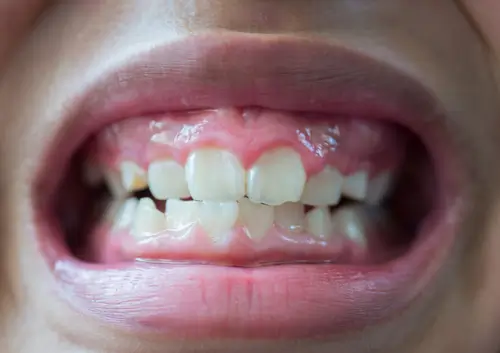
Dentists call a gummy smile excessive gingival display. There is no single cutoff that every clinician uses, but research reviews often describe more than about 3 millimeters of visible gum during a full smile as the point where many people start to notice it. The causes are usually grouped by where the extra gum display comes from:
- Excess gum tissue: Gums can overgrow because of genetics, inflammation, or certain medications, which makes teeth look short and square.
- Altered passive eruption: As adult teeth come in, the gum line normally moves up the tooth. When it stops short, part of the crown stays covered by gum and sometimes bone.
- A hypermobile upper lip: The muscles that lift the lip pull it higher than usual when you smile, exposing a band of gum above the teeth.
- A short upper lip: A lip that is naturally short at rest leaves more gum on display, even when the teeth and gums are a normal size.
- Vertical maxillary excess: The upper jaw has grown farther downward than average, so the whole upper arch sits lower in the face.
These causes often overlap. A person can have slightly short-looking teeth and a lip that lifts high, for example. A 2024 review of current lip repositioning techniques published in Cureus describes the condition as multifactorial and names a hypermobile upper lip and altered passive eruption as the two most common causes. That is why the treatment plan has to follow the diagnosis rather than the other way around.
How We Find the Cause
A gummy smile evaluation looks at your teeth, gums, lips, and jaws together. We measure how much gum shows at rest and at a full smile, how far your upper lip moves, and how long your front teeth are compared with their width. Teeth that look short but have normal proportions under the gum line point toward a soft tissue or bone issue, while normal teeth paired with a very mobile lip point toward the lip.
Dental X-rays help us see where the bone sits in relation to the gum line and tooth roots. That detail matters, because it decides whether gum tissue alone can be reshaped or whether a small amount of bone also needs attention. We also review your health history and current medications, since some drugs can contribute to gum overgrowth.
Gum Contouring and Crown Lengthening
When extra gum tissue is the cause, gum contouring is often the simplest fix. Also called a gingivectomy, it removes and reshapes excess gum so more of each tooth is visible and the gum line looks even. The area is numbed first, and the procedure is usually done in a single visit. Most people notice some tenderness for a short time afterward, and the gums continue to settle into their new shape over the following weeks.
Crown lengthening goes a step further. When the teeth are covered by both gum and bone, as often happens with altered passive eruption, the surgeon reshapes the gum and also recontours a small amount of the supporting bone. This keeps a healthy space between the bone and the new gum line so the tissue does not simply grow back over the tooth. Crown lengthening is also used for restorative reasons, such as exposing enough tooth structure to hold a crown.
Both procedures can give long-lasting results when the diagnosis is right. If you are trying to decide which one applies to you, our post on gingivectomy vs. crown lengthening explains the differences in more detail.
Ready to Schedule Your Consultation?
Our oral surgeons can help you find the right treatment for your smile. Schedule your appointment today.
Lip Repositioning Surgery
When the teeth and gums are a normal size but the upper lip lifts too high, lip repositioning surgery is one option. The surgeon removes a narrow strip of tissue from the inside of the upper lip and stitches the lip lining to the gum tissue higher up. This limits how far the lip can pull upward when you smile, so less gum shows. There are no external incisions, and the change is made from inside the mouth.
Recovery usually involves some swelling and tightness in the lip, and you may be asked to limit big smiles and wide mouth movements while the area heals. Because the lip muscles are strong, some gum display can return over time. Research on the procedure reports that relapse is possible, and surgeons have developed modified techniques to reduce it. Lip repositioning is generally considered for a hypermobile lip or mild jaw-related gum display, not for cases where the upper jaw has grown significantly too long.
This is a general treatment option for gummy smiles. If your evaluation suggests a hypermobile lip is the main issue, we can talk about whether it is a reasonable choice for you or whether another approach would serve you better.
Botox for a Gummy Smile
Botox offers a nonsurgical way to soften a gummy smile caused by an overactive upper lip. Small doses injected into the muscles that elevate the lip relax them enough that the lip does not rise as high. The treatment takes only a few minutes, and there is no recovery period beyond some possible minor bruising at the injection sites.
The tradeoff is that Botox is temporary. According to published research, the effect typically lasts about three to six months, so ongoing results require repeat appointments. Some people use Botox as a trial run to see how they feel about a lower lip line before choosing a permanent procedure. Surgeons also sometimes use it alongside lip repositioning surgery to reduce muscle pull while the tissue heals.
Our Elizabeth office provides Botox treatments for both cosmetic and functional concerns of the face and jaw. Whether Botox is a good fit for your gummy smile depends on what your evaluation shows, and we can review that with you at your visit.
Orthodontics and Jaw Surgery
In some cases, a gummy smile is the result of how the jaws and teeth are positioned. Teeth that have drifted downward or a deep bite can increase gum display. For these patients, orthodontic treatment or jaw surgery may be needed to achieve a lasting change. Braces or clear aligners can move the upper front teeth into a better vertical position and correct bite problems that contribute to the gummy look.
When the upper jaw has grown too far downward, known as vertical maxillary excess, orthognathic (corrective jaw) surgery is considered the primary treatment. During this surgery, the upper jaw is repositioned higher, which reduces how much gum shows and can also improve the bite and facial balance. Jaw surgery is a larger undertaking than the other options here. It usually involves orthodontic preparation before and after, a hospital or surgical setting, and a longer recovery. It is generally reserved for more significant skeletal cases.
Because orthognathic surgery affects both function and appearance, insurance and medical necessity questions often come up. Our article on when jaw surgery is medically necessary vs. cosmetic covers how that distinction is usually made.
Choosing the Right Treatment
The best gummy smile treatment is the one that matches the cause. Gum contouring and crown lengthening address tissue and bone covering the teeth. Lip repositioning and Botox address how the lip moves. Orthodontics and jaw surgery address where the teeth and jaws sit. A treatment aimed at the wrong cause may give a disappointing result, which is why a careful diagnosis comes first.
Other factors also shape the plan. These include how much gum you want to stop showing, how much downtime you can take, whether you prefer a permanent or reversible option, and whether you have other dental work planned, such as crowns or veneers. In many cases, a combined approach works well. For example, crown lengthening on a few front teeth may be paired with Botox for the lip.
Comfort matters too. Most gum procedures are done with local anesthesia, and our offices also offer sedation options for patients who feel anxious about oral surgery. We will explain what to expect from each step so there are no surprises on the day of your procedure.
Why Choose Legacy Oral Surgery for Your Gummy Smile Treatment?
With more than 25 years of experience, Dr. Nancy Herbst leads our team of oral and maxillofacial surgeons. Surgeons with this training work every day with the gums, bone, and jaws that determine how a smile looks. At Legacy Oral Surgery, that means we can evaluate the tissue, the bone, and the bite together and recommend a plan based on the actual cause of your gummy smile, not just its appearance.
We serve patients from our offices in Staten Island, NY, and Elizabeth and Union City, NJ. If you would like to find out which gummy smile treatment fits you, request a consultation with our team.
Frequently Asked Questions About Gummy Smile Treatment
How much gum showing is considered a gummy smile?
There is no single official number, but many clinicians and research reviews describe more than about 3 millimeters of visible gum during a full smile as excessive gingival display. How much it bothers you matters just as much. Some people with a small amount of gum display want it reduced, while others with more are comfortable with their smile.
Can a gummy smile be fixed without surgery?
In some cases, yes. Botox injections can relax the muscles that lift the upper lip, which reduces gum display for about three to six months. Orthodontic treatment may help when tooth position is part of the problem. When excess gum tissue, covered tooth structure, or jaw growth is the cause, a surgical procedure is usually needed for a lasting change.
Are the results of gum contouring permanent?
Gum contouring and crown lengthening are generally long-lasting when they address the true cause. If gum overgrowth was caused by a medication or inflammation, some tissue may return unless that cause is managed. Good brushing, flossing, and regular dental visits help keep the new gum line healthy.
Does gummy smile treatment hurt?
Gum procedures are performed with local anesthesia, so the area is numb during treatment. Afterward, most people feel some tenderness or swelling that can usually be managed with over-the-counter pain relief and the aftercare instructions your surgeon provides. Sedation options are available for patients who feel anxious about oral surgery.
Is gummy smile treatment covered by insurance?
It depends on the procedure and the reason for it. Treatments done purely for appearance are often considered cosmetic and may not be covered. Crown lengthening done to support a crown, or jaw surgery done to correct a bite problem, may qualify for coverage in some cases. Our team can review your plan and help you understand your benefits before treatment.
About the Author
Oral and Maxillofacial Surgeon | Owner, Legacy Oral Surgery
Dr. Nancy Herbst has more than 25 years of experience and leads the team of oral and maxillofacial surgeons at Legacy Oral Surgery. She earned her Doctorate of Dental Surgery from New York University College of Dentistry and served as Chief Resident in the Department of Oral and Maxillofacial Surgery at Jersey City Medical Center.