Medically Reviewed by Dr. Nancy Herbst, DDS on August 13, 2026
An implant-supported bridge is generally considered the stronger long-term option compared to a traditional bridge because it anchors to the jawbone through dental implants rather than relying on neighboring natural teeth for support. That difference in support is what gives implant-supported bridges their added stability, durability, and bone-preserving benefits.
When you have multiple neighboring teeth missing, a dental bridge can help quickly restore the natural look and function of your smile. A gap in your teeth can cause feelings of insecurity and make everyday activities like eating and speaking more difficult, and if left untreated, it can also cause your remaining teeth to shift, your gums to recede, and your jawbone to weaken. Dental bridges come in two forms: implant-supported and traditional. Depending on the specifics of your mouth and the current status of your oral health, your oral surgeon can guide you toward the option that fits your needs. To see how an implant-supported bridge could benefit you, schedule a consultation with a professional oral surgeon at Legacy Oral Surgery today.
Why an Implant-Supported Bridge May Be Better Than the Traditional Method
Not every method works for everyone, and the same goes for dental implant options. For patients considering a bridge and weighing implant-supported against traditional, Legacy Oral Surgery has put together a guide on the specific benefits of implant-supported bridges.
More Flexible
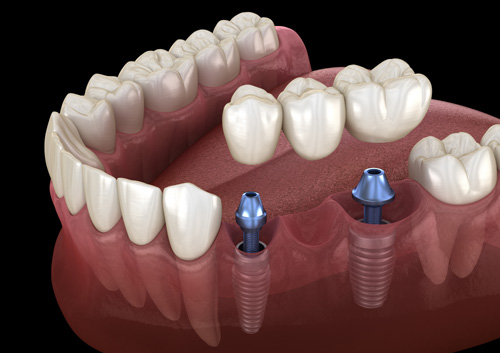
An implant-supported bridge gives patients more flexibility because it does not rely on any remaining healthy teeth for support. Implant-supported bridges use two dental implants, which can be particularly helpful for those affected by gum disease or who have already had teeth extracted. Titanium posts are placed on both sides of the missing teeth, and once that area heals, crowns are placed to form a bridge from post to post. Unlike the traditional method, the neighboring teeth do not need to be shaved down or modified in any way.
Lasts Longer
Dental implants placed into a healthy jawbone stimulate bone growth in much the same way a natural tooth root does, which helps preserve bone volume and density. This allows an implant-supported bridge to last significantly longer than the traditional method. Traditional dental bridges typically last around 15 years, though this can vary. Implants that are cared for properly, through daily brushing, flossing, and regular dental visits, can potentially last for decades.
Protects Your Remaining Teeth
Both implant-supported and traditional bridges do a good job of replicating the natural look and function of your regular teeth, but they differ in how they treat the teeth around the gap. A traditional bridge requires the neighboring teeth to be reshaped to hold a crown, which permanently alters otherwise healthy teeth. An implant-supported bridge leaves those teeth untouched. If the crowns on an implant-supported bridge ever show discoloration, chipping, or other damage, your oral surgeon can typically replace them without disturbing the implant post underneath.
Is an Implant-Supported Bridge Right for You?
Good candidates generally have enough jawbone density to support an implant and are in good overall oral health, though a bone graft can sometimes create a foundation for patients who do not initially qualify. If you are missing several teeth in a row rather than just one, it is also worth comparing an implant-supported bridge to other multiple-teeth replacement options and to implant-supported dentures to see which fits your goals and budget. Healing time varies by patient, and our guide to the stages of dental implant healing walks through what to expect after your implants are placed.
Receive a Professional Examination and Discuss Your Options Today
Legacy Oral Surgery has proudly served the New Jersey community for many years and would love to do the same for you. We offer the finest in facility standards, surgical methods, and technology. Our team of oral and maxillofacial surgeons, led by Dr. Nancy Herbst, brings the experience and compassion needed to offer efficient, personalized, and cost-effective care.
To get started with a consultation and begin devising a treatment plan today, call our office at (201) 601-9262 or fill out a contact form to schedule an appointment.
Frequently Asked Questions About Implant-Supported Bridges
What is the difference between an implant-supported bridge and a traditional bridge?
An implant-supported bridge anchors to two or more dental implants placed in the jawbone, while a traditional bridge anchors to the natural teeth on either side of the gap, which requires those teeth to be reshaped to hold crowns.
How many teeth can an implant-supported bridge replace?
An implant-supported bridge can typically replace three or more consecutive missing teeth using as few as two implants, though the exact number depends on the location in the mouth and the strength of the surrounding jawbone.
Am I a good candidate for an implant-supported bridge?
Good candidates generally have adequate jawbone density and healthy gums. Patients who do not initially have enough bone can sometimes become candidates after a bone graft, so a consultation and imaging are the best way to confirm candidacy.
How long does it take to get an implant-supported bridge?
The process typically spans a few months, since the implants need time to fuse with the jawbone before the permanent bridge is attached. Your oral surgeon can give you a more specific timeline once your candidacy and treatment plan are confirmed.
How do I care for an implant-supported bridge?
Implant-supported bridges are cared for much like natural teeth, with daily brushing, flossing under the bridge with a floss threader or water flosser, and regular dental visits to check the health of the implants and surrounding gum tissue.
About the Author
Founder, Legacy Oral Surgery and Implants
Dr. Nancy Herbst has over 25 years of experience treating patients and leads the team of board-certified oral and maxillofacial surgeons at Legacy Oral Surgery.