Medically Reviewed by Dr. Nancy Herbst, DDS on August 13, 2026
Microneedling facials work because they put the skin’s own repair system to work. A microneedling device creates thousands of tiny, controlled channels in the skin, and the body responds the way it responds to any small wound: it clears damaged tissue, builds new collagen and elastic fibers, and then slowly remodels that new tissue over the following months. The smoother texture, softer scarring, and firmer feel that patients notice are the end product of that healing process rather than of the needles themselves.
At Legacy Oral Surgery and Implants, we offer microneedling through our aesthetics services, in addition to our oral and maxillofacial care. Because our practice is built around surgery of the face and jaws, wound healing is something our team thinks about every day, and it is the clearest way to explain why this treatment works, why sessions are spaced weeks apart, and why results build gradually. This post focuses on that biology. If you are weighing cost and value, our article on whether microneedling is worth it covers that question, and what to expect from microneedling walks through the appointment and aftercare step by step.
What Happens in the Skin During Microneedling
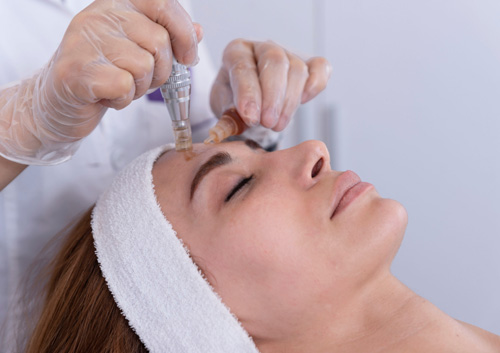
Microneedling, also called collagen induction therapy, uses fine, sterile needles that pass through the epidermis, the protective outer layer of the skin, and into the upper dermis, where collagen and elastin are made. Professional devices let the provider adjust needle depth for different areas of the face and different concerns. The channels are very narrow and close quickly, so the surface of the skin stays largely intact between them.
That is the main difference between microneedling and ablative resurfacing treatments, which remove or heat away the outer layer of skin across the whole treatment area. Each microneedling channel is a small, controlled injury. Because the injuries are tiny and evenly spread, the skin can launch a healing response across the treated area without the open wound and longer recovery that come with removing the entire surface layer.
The Three Phases of Healing Behind Your Results
The skin’s response to microneedling follows the same three overlapping stages that describe wound healing anywhere in the body. Knowing them explains most of what you will see in the mirror after a treatment.
Inflammation in the First Few Days
Right after treatment, platelets and immune cells move into the treated area and release signaling proteins, often called growth factors, that call in the cells responsible for repair. This is why skin looks pink and feels warm, similar to a mild sunburn, for a day or two. That short period of inflammation is part of how the treatment works rather than a sign that something has gone wrong.
Proliferation Over the Following Weeks
Next, fibroblasts, the cells that produce the skin’s structural proteins, become more active and begin laying down new collagen and elastic fibers. Much of the early collagen is type III, a finer and more flexible form that the body produces first in healing tissue. Skin may look more even and refreshed during this stage, but the new tissue is still immature.
Remodeling Over Several Months
Over the following months, the body gradually reorganizes this new tissue, replacing much of the early collagen with sturdier type I collagen and arranging the fibers into a more orderly network. This remodeling phase is why the fullest improvement in texture and scarring typically develops over several months after a series of treatments, rather than within days of a single session.
What the Research Shows About Collagen Changes
Several studies have examined skin under the microscope before and after microneedling. In a 2015 study published in the International Journal of Dermatology, researchers took skin biopsies from patients who received a series of microneedling sessions for facial rejuvenation and reported statistically significant increases in collagen types I, III, and VII, in newly formed collagen, and in tropoelastin, a building block of elastic fibers. An earlier retrospective review of 480 patients, published in Plastic and Reconstructive Surgery in 2008, reported improvement in fine wrinkles, scars, and lax skin, along with increased collagen and elastin in the small group of patients who had biopsies.
These findings support the basic mechanism, but the studies were small or retrospective, and the research on microneedling for rejuvenation often combines it with other treatments. Results vary with the person, the device, the depth used, and the concern being treated. Microneedling can improve the appearance of many concerns, but it does not erase scars or wrinkles, and the improvement it produces is gradual.
How the Biology Shapes Your Treatment Plan
Because results depend on a healing cycle, the way a microneedling plan is built follows directly from that biology. Here is how the healing process connects to the most common recommendations.
- Sessions spaced weeks apart: Spacing gives each round of new collagen time to form and begin remodeling before the skin is treated again, so plans often involve several sessions about four to six weeks apart.
- Gradual results: Early changes in tone and texture can appear within a couple of weeks, while firmer skin and softer scarring build over months as remodeling continues.
- Depth matched to the concern: Scars and thicker skin typically call for deeper treatment than fine surface texture, and thinner areas of the face are treated more gently.
- Gentle care and sun protection afterward: Healing skin is more vulnerable to irritation and pigment changes, so protecting it supports the repair process the treatment started.
Your provider will tailor each of these choices to your skin, your concerns, and how your skin responds after the first session.
Why Microneedling Helps Some Concerns More Than Others
Because microneedling works by stimulating collagen in the dermis, it tends to be most useful for concerns rooted in that layer, such as depressed acne scars, fine lines, uneven texture, and enlarged-looking pores. It is less effective for concerns it cannot reach, such as deep folds caused by volume loss, which may be better addressed with other treatments such as dermal filler. Some patients also add a serum to take advantage of the open channels; our article on adding PRP or exosomes to microneedling explains what the research shows for each option and notes that the FDA has not approved any exosome product.
Professional microneedling devices are regulated by the U.S. Food and Drug Administration as medical devices. According to the FDA’s overview of microneedling devices, the agency has authorized specific devices, through its De Novo and 510(k) clearance pathways, to improve the appearance of facial acne scars, facial wrinkles, and abdominal scars in adults 22 and older. The FDA lists temporary redness, dryness, flaking, and bruising as common effects, and less common risks include pigment changes, infection, and reactivation of cold sores. It also notes that the treatment may not be suitable for people with bleeding disorders, active skin infections, or uncontrolled diabetes, or for those who are pregnant or breastfeeding, which is why a consultation and health history review come first.
Schedule a Microneedling Consultation at Legacy Oral Surgery and Implants
Our practice is led by Dr. Nancy Herbst, who has more than 25 years of experience, and our team brings a surgeon’s attention to facial anatomy, sterile technique, and healing to every aesthetic treatment we offer. During a consultation, we review your skin, your medical history, and your goals, and we explain realistic expectations for how your skin may respond over a series of treatments.
To schedule an appointment and learn more about how we can help you, complete our contact form.
Frequently Asked Questions About Microneedling
How does microneedling stimulate collagen?
The tiny channels created during treatment act as controlled micro-injuries. The skin responds with a normal healing sequence: a short inflammatory phase that releases growth factors, a proliferation phase in which fibroblasts produce new collagen and elastic fibers, and a remodeling phase that strengthens and organizes that new tissue over several months.
How many microneedling sessions will I need?
Many treatment plans involve a series of several sessions spaced about four to six weeks apart, which gives each round of new collagen time to form before the next treatment. Deeper concerns such as acne scarring often need more sessions than general texture improvement. Your provider will recommend a plan based on your skin and goals.
How soon will I see results from microneedling?
Some improvement in tone and texture can appear within a couple of weeks as new collagen begins to form. Fuller results, such as firmer skin and softer scarring, typically develop over several months as the body remodels that collagen, and they build across a series of treatments. Results vary from person to person.
Is microneedling painful?
Most patients describe the sensation as mild warmth, pressure, or light scratching rather than significant pain. A topical numbing agent is typically applied beforehand to keep the treatment comfortable, and deeper settings used for scars may cause brief, manageable discomfort.
How much downtime does microneedling require?
Downtime is usually short. Redness similar to a mild sunburn is common for one to three days, reflecting the early inflammatory phase of healing, and some people notice light dryness or flaking. Gentle skin care and daily sunscreen help protect the skin while it repairs.
Who is a good candidate for microneedling?
Many skin types and tones can benefit from microneedling for concerns such as acne scarring, uneven texture, and early signs of aging. It may not be suitable for people with active skin infections, bleeding disorders, or uncontrolled diabetes, or during pregnancy or breastfeeding. A consultation confirms whether it is the right fit for your skin and health history.
About the Author
Owner, Legacy Oral Surgery and Implants
Dr. Nancy Herbst has more than 25 years of experience and is the owner of Legacy Oral Surgery, which opened in 2011. She trains residents at Newark Beth Israel Medical Center and Jersey City Medical Center.