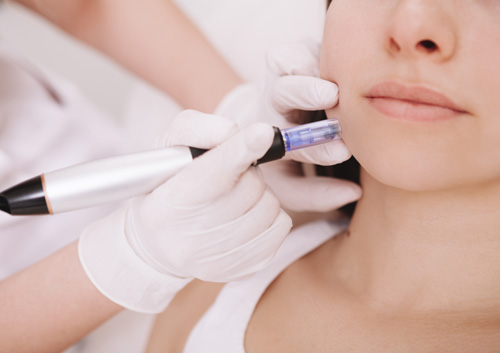
Microneedling is a proven method for stimulating the skin’s natural healing response, but its effects can be significantly amplified when paired with the right topical enhancement. Platelet-rich plasma (PRP) and exosomes are two of the most scientifically supported options for boosting the results of a microneedling treatment, each working through distinct biological mechanisms to accelerate repair, increase collagen production, and improve skin quality over time.
At Legacy Oral Surgery and Implants, we offer advanced skin rejuvenation services including microneedling facial treatments enhanced with PRP and exosomes. Dr. Nancy Herbst and our team are trained in both the surgical and aesthetic dimensions of facial care, which allows us to approach skin health with a level of anatomical precision that goes beyond standard cosmetic treatment. If you are interested in learning which enhancement option may be right for you, reach out through our contact form to schedule a consultation.
What Is Microneedling and How Does It Work?
Microneedling uses a device with fine, sterile needles to create thousands of controlled micro-injuries in the surface of the skin. These tiny channels trigger the body’s wound-healing cascade, prompting the production of new collagen and elastin in the dermis. The result, over a series of treatments, is firmer, smoother skin with improved texture, reduced acne scarring, minimized fine lines, and more even tone.
One of microneedling’s most valuable properties is the temporary permeability it creates in the skin barrier. Immediately after treatment, the microchannels allow topical agents applied to the skin to penetrate far more deeply than they would through intact skin. This window of enhanced absorption is exactly why pairing microneedling with a bioactive enhancement like PRP or exosomes can deliver results that neither treatment achieves alone. Choosing the right enhancement depends on your skin concerns, your biological factors, and your treatment goals.
The Benefit of Adding PRP to Microneedling
Platelet-rich plasma is derived from the patient’s own blood. A small blood draw is processed in a centrifuge to concentrate the platelets, which are then applied to the skin during and after microneedling. Platelets release growth factors including platelet-derived growth factor (PDGF), transforming growth factor-beta (TGF-beta), and vascular endothelial growth factor (VEGF), which collectively signal skin cells to accelerate repair, stimulate collagen synthesis, and promote the formation of new blood vessels.
Because PRP is autologous, meaning it comes from the patient’s own body, the risk of allergic reaction or immunological rejection is essentially eliminated. This makes it an appropriate option across a broad range of patients. The growth factors delivered by PRP are particularly effective for addressing fine lines and wrinkles, skin laxity, acne scarring, and uneven texture. The combination of microneedling’s collagen-stimulating mechanical effect and PRP’s biological signaling creates a compounding benefit that supports more significant skin remodeling than microneedling alone.
PRP treatments can also be performed on areas beyond the face, including the neck, décolletage, and hands, which makes it a versatile option for patients seeking comprehensive skin rejuvenation in multiple zones.
Ready to Schedule Your Consultation?
Our board-certified oral surgeons are here to help you find the right treatment. Schedule your appointment today.
The Benefit of Adding Exosomes to Microneedling
Exosomes represent a newer and increasingly well-researched frontier in regenerative aesthetics. These are nanoscale extracellular vesicles, essentially tiny biological messengers secreted by stem cells, that carry proteins, lipids, RNA, and growth factors. When introduced into the skin through microneedling channels, exosomes communicate directly with skin cells at the molecular level, delivering instructions that support cellular repair, reduce inflammation, and stimulate collagen and elastin production.
Unlike PRP, exosomes are not derived from the patient’s own blood. They are typically produced from mesenchymal stem cell cultures and prepared as a stable, standardized formulation. This means their growth factor and signaling molecule content is consistent from treatment to treatment, which allows for more predictable delivery of bioactive compounds. For some patients, particularly those with concerns about skin inflammation, redness, or sensitivity, exosomes may offer a more targeted anti-inflammatory effect alongside their regenerative benefits.
Early research on exosome-enhanced microneedling is promising, with studies documenting improvements in skin hydration, elasticity, pigmentation, and fine line reduction. Exosomes are particularly well-suited for patients interested in addressing hyperpigmentation, dullness, or overall skin quality in addition to textural concerns.
PRP vs. Exosomes: Which Enhancement Is Right for You?
Both PRP and exosomes are powerful complements to microneedling, but they are not identical in their mechanisms, applications, or ideal patient profiles. Understanding the differences helps inform which option to pursue.
PRP is the established choice for patients seeking a natural, autologous approach supported by a long clinical track record. Its growth factor profile makes it especially effective for collagen stimulation, skin laxity, and scar remodeling. Because it is derived from your own blood, there is no risk of external material reaction, which appeals to patients who prefer to keep all treatment components within their own biology.
Exosomes are well-suited for patients who want the most current regenerative technology, particularly those with inflammatory skin conditions, hyperpigmentation, or a desire for a standardized and highly concentrated bioactive delivery. They may also be preferred for patients who are not comfortable with the blood draw required for PRP.
A consultation with our team allows us to review your skin concerns, your medical history, and your treatment history to help you make an informed choice between these two options.
What to Expect During and After Treatment
At Legacy Oral Surgery and Implants, microneedling with PRP or exosomes is performed in a controlled clinical environment. A topical numbing cream is applied before treatment to minimize discomfort. The microneedling device is passed over the treatment area at a depth calibrated to your skin type and concerns, and the PRP or exosome serum is applied during and immediately after the procedure to maximize absorption through the open channels.
Following treatment, some redness and mild swelling are normal and typically resolve within 24 to 48 hours. Sun protection is essential in the days following treatment, and we provide specific aftercare instructions to ensure optimal healing. Most patients complete a series of three to four treatments spaced four to six weeks apart to achieve their desired results, with maintenance sessions scheduled thereafter to sustain the improvements.
Frequently Asked Questions About PRP and Exosome Microneedling
How many microneedling sessions do I need to see results?
Most patients complete a series of three to four sessions spaced four to six weeks apart to achieve meaningful improvement. Some patients with deeper scarring or more significant skin laxity may benefit from additional sessions. Initial improvements in skin texture and tone are often visible after the first or second treatment, but the full benefit from collagen remodeling continues to develop over the weeks following each session. Annual maintenance treatments help sustain results over the long term.
Is there downtime after microneedling with PRP or exosomes?
Downtime is minimal for most patients. Redness and mild swelling are typical in the first 24 to 48 hours after treatment and generally resolve on their own. Most patients are comfortable returning to work within one to two days. Makeup should be avoided for at least 24 hours following treatment, and sun exposure should be minimized and protected with broad-spectrum SPF during the healing period. Patients with particularly sensitive skin may experience slightly more prolonged redness, which your provider can discuss at your consultation.
Can PRP or exosome microneedling treat acne scars?
Yes. Microneedling is one of the most effective non-surgical treatments for acne scarring, and pairing it with PRP or exosomes enhances the scar remodeling process. The growth factors in PRP stimulate collagen production that fills in atrophic (depressed) scars over time, while exosomes support cellular communication that accelerates tissue repair. Results vary based on the depth and type of scarring, and multiple sessions are typically needed to achieve significant improvement in pitted or rolling scars.
Who is not a good candidate for this treatment?
Certain conditions may make microneedling with PRP or exosomes inadvisable, including active skin infections or open wounds in the treatment area, blood clotting disorders or anticoagulant medications, a history of keloid scarring, and active inflammatory skin conditions in the treatment zone. Pregnancy is also a contraindication. Your provider will review your medical history during the consultation to confirm that treatment is appropriate for you and to identify any adjustments needed to your plan.
What is the difference between PRP and exosomes in terms of results?
Both PRP and exosomes promote collagen stimulation, skin repair, and overall rejuvenation, but they work through different mechanisms. PRP relies on the growth factors concentrated from your own platelets, making it particularly effective for skin laxity, wrinkles, and scar remodeling with a long clinical history. Exosomes deliver a standardized payload of molecular signals derived from stem cells, which may offer a more consistent anti-inflammatory and regenerative effect session to session. Many patients who have tried both describe the results as comparable, with individual response varying based on skin type and treatment goals. Your provider can help you weigh these factors during a consultation.